



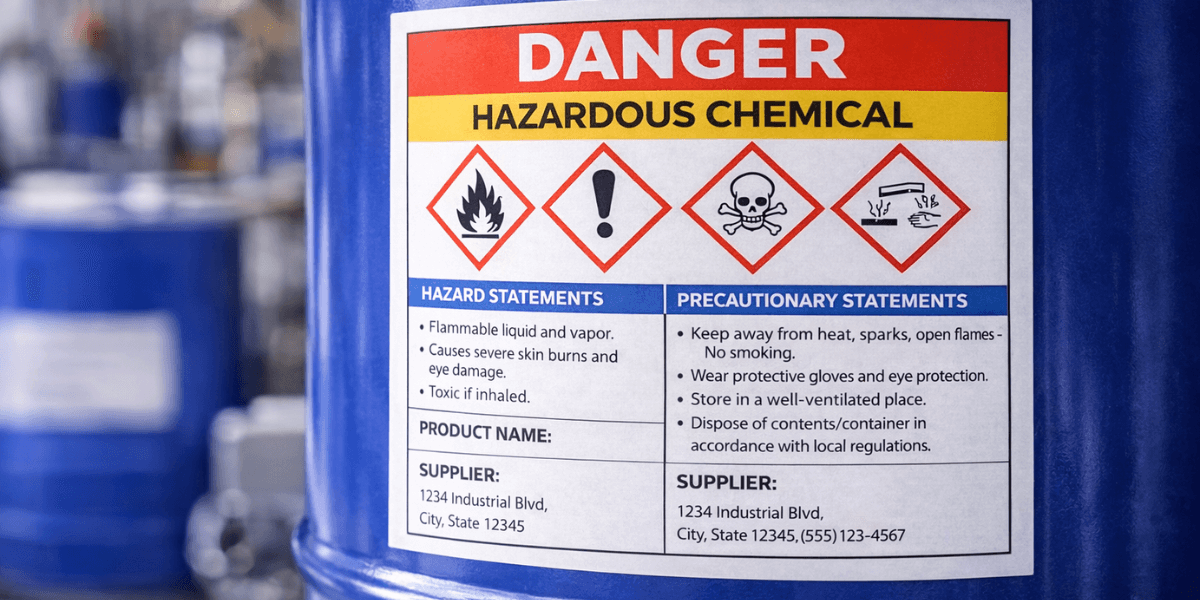
Durable GHS Labels for Chemical Safety and Regulatory Compliance
GHS labels play a critical role in chemical safety across industrial, manufacturing, and commercial environments. These labels communicate hazards, handling instructions, and safety information for chemical products. For that information to remain effective, labels must stay legible and securely attached throughout the life of the product, even when exposed to harsh conditions.
In real-world applications, chemicals are often handled in environments involving solvents, oils, abrasion, heat, and frequent contact. When safety labels degrade or fall off, essential information can be lost, increasing risk for workers and organizations. Durability is therefore a core requirement for chemical hazard labeling, not an optional feature.
What Are GHS Labels and Why They Are Required
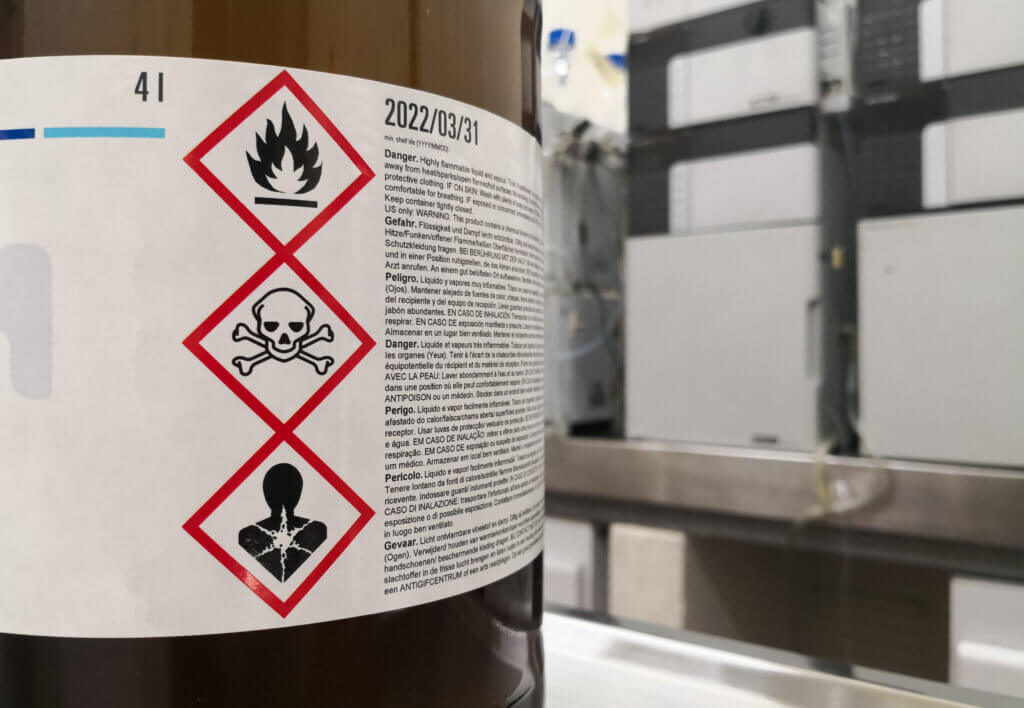
GHS labels are part of the Globally Harmonized System of Classification and Labelling of Chemicals. This system was developed to standardize how chemical hazards are communicated across industries and countries.
These labels are required on many chemical products to ensure users can quickly identify hazards and understand safe handling practices. GHS labeling helps create consistency by using standardized symbols, signal words, and statements to communicate risk clearly.
While regulations define what information must appear on a label, the physical performance of the label determines whether that information remains available over time.
Key Elements Found on GHS Chemical Labels
Chemical hazard labels include specific components designed to communicate safety information at a glance. Each element must remain readable and intact for the label to serve its purpose.
Common elements include:
- Hazard pictograms that visually indicate risk
- Signal words that communicate severity
- Hazard statements describing potential dangers
- Precautionary statements outlining safe handling practices
- Product identification and supplier information
If these elements fade, smear, or peel away, the label no longer fulfills its safety function.
Why Durability Matters for Chemical Safety Labels in Industrial Environments
Industrial environments place constant stress on labels. Exposure to chemicals, cleaning agents, and mechanical contact can quickly degrade standard materials.
Common challenges include:
- Contact with solvents and chemical solutions
- Exposure to oils and lubricants
- Abrasion from handling and equipment contact
- Heat, moisture, or outdoor conditions
In industrial settings, GHS labels must remain legible even when exposed to chemicals, abrasion, and frequent handling.Durable labeling solutions help ensure safety information remains visible even after repeated exposure to harsh conditions.
Durable Materials Used for Chemical Hazard Labels
Material selection has a direct impact on long-term label performance. Paper materials may work in controlled environments but often fail when exposed to moisture or chemicals.
Film-based materials are commonly used for industrial chemical labeling because they resist absorption, tearing, and breakdown. These materials help maintain structural integrity and support consistent print quality over time.
Choosing the right material helps preserve legibility and adhesion throughout the product lifecycle.
Adhesives and Print Methods That Support Long-Term Label Legibility
Durability depends not only on the label material but also on the adhesive and print system used. Oils and chemicals can interfere with adhesion, while abrasion and exposure can affect printed information.
Key considerations include:
- Adhesives formulated for challenging surfaces
- Ink systems designed to resist fading and smearing
- Protective coatings or laminates that shield printed content
When these elements are properly matched to the application, labels remain readable and securely attached.
Chemical Hazard Labels Used on UL Evaluated Products and Equipment
Many products evaluated by UL rely on labels to communicate safety and identification information. While UL establishes evaluation criteria for products, label durability plays an important role in supporting those evaluations.
Labels applied to UL evaluated products must remain legible under expected use conditions. If labels degrade, critical safety information may no longer be available.
Durable chemical hazard labels help support products evaluated by UL by ensuring safety communication remains clear throughout the product’s intended lifespan.
Common Applications for Durable Chemical Safety Labels
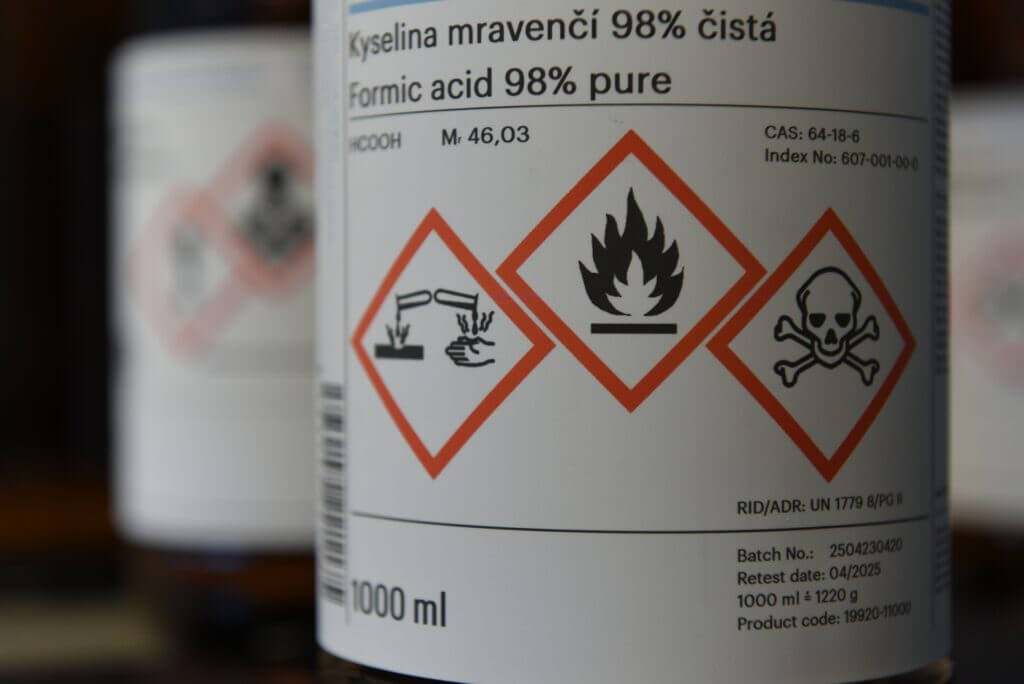
Chemical safety labels are used across a wide range of industries where hazardous materials are present.
Common applications include:
- Industrial chemicals and solvents
- Manufacturing and processing environments
- Maintenance and cleaning products
- Equipment and components exposed to chemical hazards
Each application places unique demands on label performance.
How to Choose the Right Chemical Safety Labels for Your Application
Selecting the right labeling solution requires an understanding of how and where the label will be used. Performance requirements vary depending on exposure, handling, and product lifespan.
Important factors to consider include:
- Type of chemical exposure
- Environmental conditions such as heat or moisture
- Surface material where the label will be applied
- Expected lifespan of the product
- Safety and regulatory requirements
Working with an experienced label printing partner helps ensure labeling solutions are suited to real-world conditions.
Frequently Asked Questions About Chemical Hazard Labeling
What does GHS stand for on chemical labels
GHS stands for the Globally Harmonized System of Classification and Labelling of Chemicals. It provides a standardized way to communicate chemical hazards using consistent symbols and safety information.
Are hazard labels required for all chemical products
Not all chemicals require hazard labeling. Requirements depend on the type of chemical, how it is used, and applicable safety regulations.
How long must chemical safety labels remain readable
Safety labels should remain readable for as long as the product is in use or storage. In industrial environments, this often means labels must withstand chemical exposure and repeated handling.
Do chemical hazard labels need to resist solvents and cleaning agents
In many applications, yes. Labels in industrial settings are frequently exposed to solvents, oils, and cleaners, making durability essential.
Are these labels used on industrial equipment as well as containers
Yes. Chemical hazard and safety labels are commonly applied to both containers and equipment wherever chemical risks are present.
When should manufacturers use ghs labels
Manufacturers should use ghs labels whenever products contain hazardous chemicals that require standardized safety communication and long-term label performance.
Durable GHS Label Solutions Built for Chemical Safety Applications
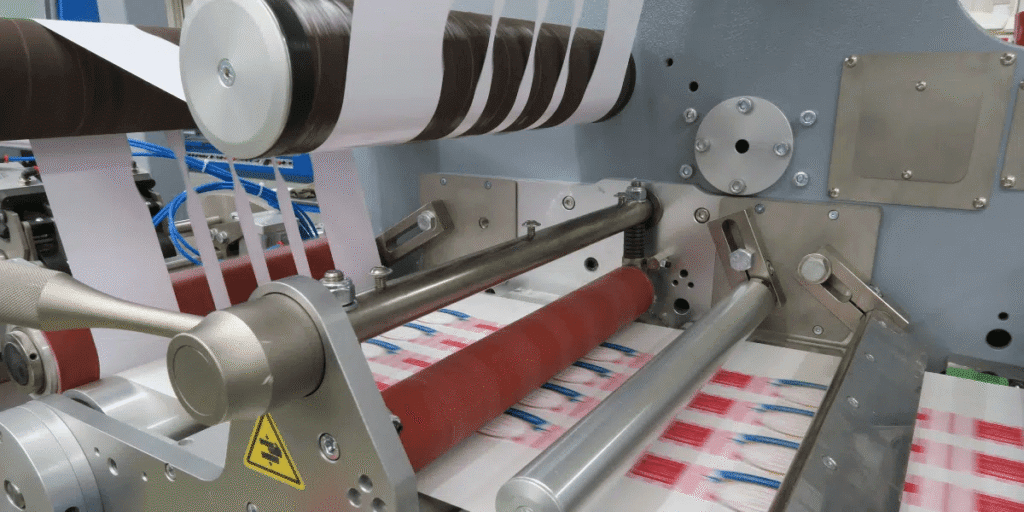
Chemical safety labeling must perform reliably in environments where exposure and handling are unavoidable. Durable label solutions help protect workers, support compliance efforts, and maintain clear hazard communication over time.
Flexo-Graphics works with manufacturers to produce durable labeling solutions designed for industrial conditions. By focusing on material selection, adhesive performance, and print durability, Flexo-Graphics helps ensure safety labels remain legible and securely attached throughout the life of the product.
If you are evaluating options for chemical hazard labeling, you can contact Flexo-Graphics to discuss your application requirements. To stay connected and see labeling insights in action, you can also follow Flexo-Graphics on Facebook or connect with Flexo-Graphics on LinkedIn.
THE LATEST FROM INOVAR
WE'RE HERE TO SERVE YOU
Creating and producing labels can be overwhelming, but our experts are here to guide you every step of the way. Whether you have a project ready to go, have questions about label applications or materials, or want to learn more about our services, our team is ready to assist you.