



Multi-State Food Labeling Laws: What Food Manufacturers Need to Know
For food manufacturers, selling a product across the United States can mean navigating more than one set of labeling requirements.
Federal regulations establish the foundation for food labeling in the U.S., but states can introduce additional requirements that affect what appears on a package. As more states introduce laws addressing ingredients, additives, warnings, claims, and other packaging information, food manufacturers need a strategy for keeping labels compliant across different markets.
For brands selling nationally, the challenge is not simply understanding what needs to be on a label. It is determining which requirements apply, when they take effect, and how those changes will impact packaging across an entire product line.
Federal Regulations Provide the Foundation
Most packaged foods sold in the United States must follow federal food labeling requirements administered by the U.S. Food and Drug Administration (FDA). These requirements address areas such as:
- Product identity
- Net quantity
- Ingredient statements
- Nutrition information
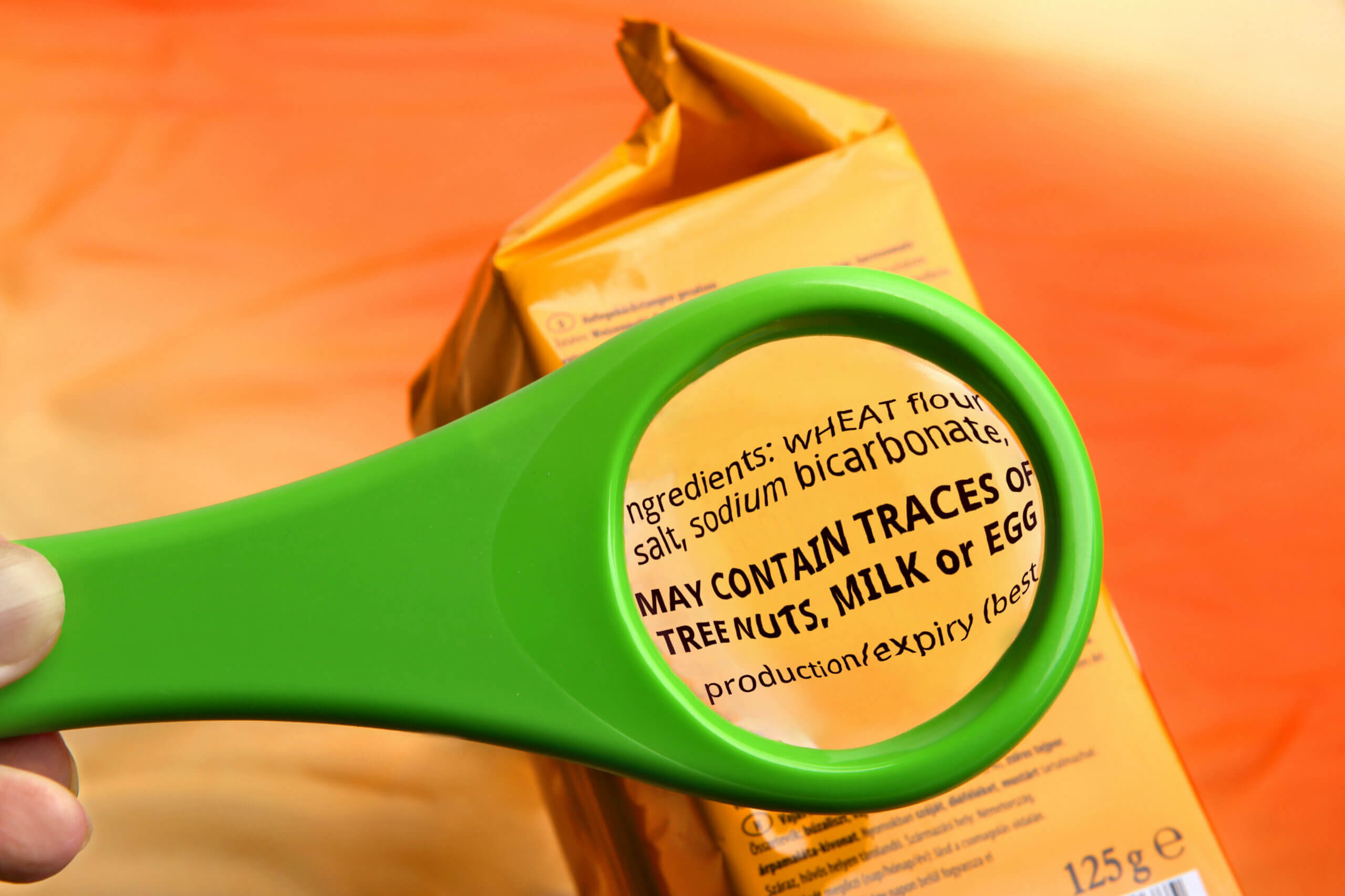
- Allergen declarations
- Manufacturer or distributor information
- Certain nutrient and health claims
The FDA’s Food Labeling Guide provides an overview of federal labeling requirements and is an important resource for food manufacturers.
However, federal compliance is not necessarily the end of the process.
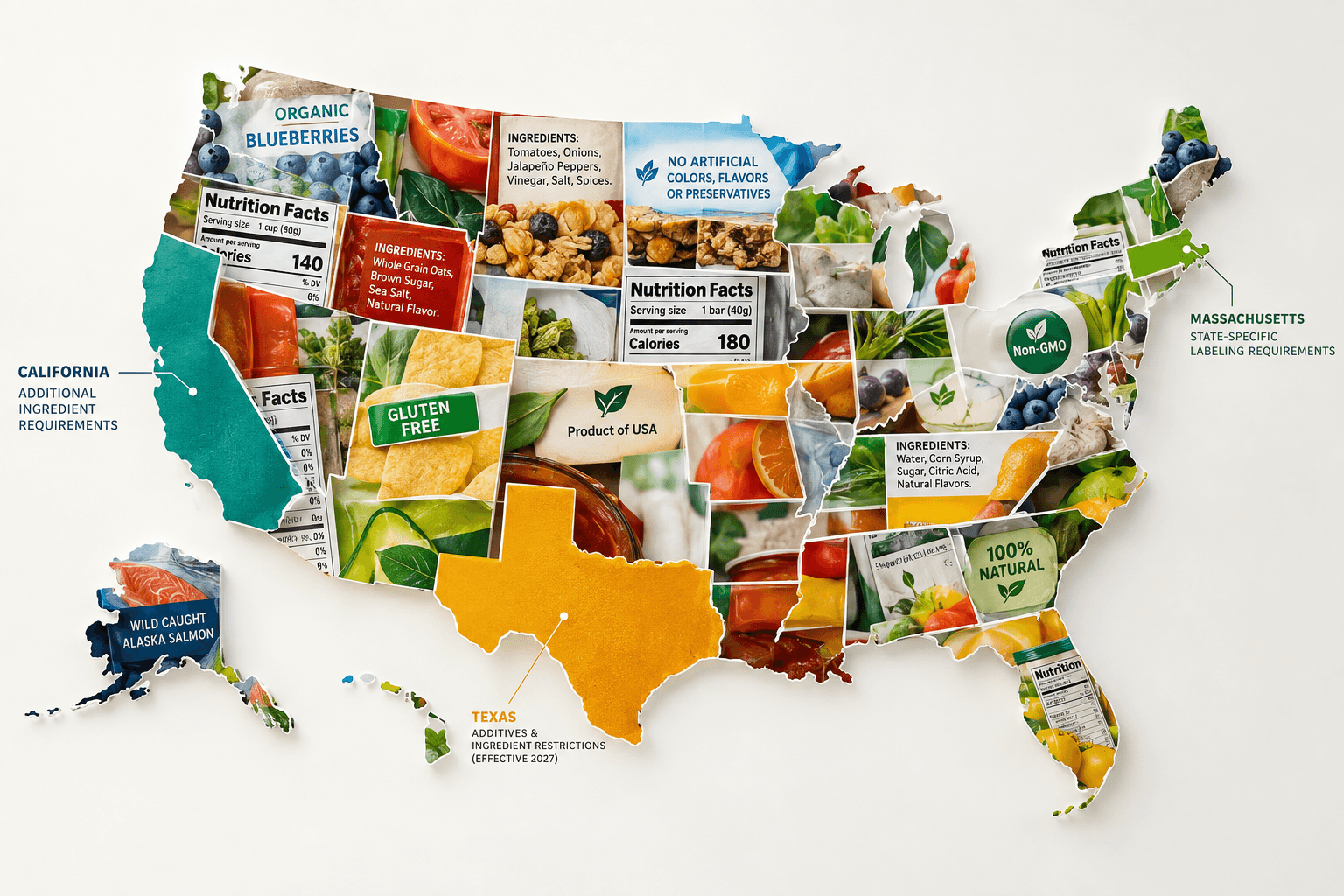
States may establish additional requirements or restrictions that affect products sold within their borders. Massachusetts, for example, maintains state-specific packaged-food labeling requirements in addition to federal requirements.
This creates an increasingly complex environment for brands that distribute products nationwide.
Why State-by-State Requirements Are Becoming More Important
Food labeling has traditionally been relatively standardized across the U.S. But state legislatures are increasingly addressing issues related to ingredients, additives, health concerns, environmental impacts, and consumer transparency.
Recent legislation illustrates how quickly these requirements can change.
For example, Texas passed legislation in 2025 addressing certain additives in packaged foods, with requirements beginning in 2027. California and other states have also introduced legislation targeting specific food ingredients and additives.
For a manufacturer selling products in multiple states, a regulatory change in one state can create a packaging decision:
Does the company create a new label specifically for that market, or change the label nationwide?
There is no one-size-fits-all answer.
The Challenge of Managing Multiple Markets
Imagine a food manufacturer sells the same product in all 50 states.
The product itself may not change, but a new state requirement could mean that the packaging does.
That can create several challenges:
1. Multiple Label Versions
A manufacturer may need a state-specific label for products sold in one market while continuing to use an existing label elsewhere.
This can mean managing multiple versions of:
- Artwork
- Regulatory copy
- SKUs
- Print files
- Inventory
- Production schedules
The more versions a company manages, the more important artwork and version control become.
2. Different Effective Dates
Regulatory changes do not necessarily take effect at the same time.
A law may be passed years before manufacturers are required to comply. Other requirements may have specific implementation dates established by the final regulation.
For example, the FDA has established January 1, 2028 as the uniform compliance date for certain food labeling regulations published during 2025 and 2026, while noting that individual regulations may establish different compliance dates.
That means manufacturers need to track not only what is changing, but also when the change needs to appear on packaging.
3. Existing Label Inventory
A regulatory change can become more complicated when thousands or millions of existing labels are already in inventory.
Before making a change, manufacturers may need to determine:
- Which labels are affected?
- Can existing inventory still be used?
- When does the new requirement apply?
- Will existing labels need to be scrapped?
- Can a label be modified with an additional label or over-label?
- Should the company transition all markets at once?
Planning ahead can help reduce unnecessary waste and avoid rushed production.
4. More SKUs Means More Complexity
A regulatory change affecting one product can become much larger when a brand has dozens or hundreds of SKUs.
Different sizes, flavors, varieties, languages, and package formats can each require artwork updates.
What initially looks like a single regulatory change can quickly become a much larger packaging project.
Should You Create State-Specific Labels?
When a requirement applies to one state, manufacturers generally have a few options to consider.
Option 1: Create a State-Specific Label
A manufacturer can create a separate version of the package specifically for products sold in that state.
Advantages:
- Keeps other packaging unchanged
- Limits regulatory language to affected markets
- Can preserve existing national artwork
Considerations:
- Requires additional artwork and inventory management
- May require separate SKUs or production runs
- Increases packaging complexity
Option 2: Update the National Label
Another approach is to incorporate the new information into the label used across all markets.
Advantages:
- One label version
- Simplified inventory management
- Easier production planning
Considerations:
- Additional information may take up valuable label space
- The change may affect branding or design
- Manufacturers may be adding information that is only legally required in one market
Option 3: Use an Extended Content Label
When additional regulatory information creates a space problem, an extended content label can provide another solution.
Extended content labels, including peel-and-reveal, multi-panel, leaflet, and booklet formats, allow manufacturers to add information without significantly increasing the footprint of the package.
This can be especially useful when a product needs additional warnings, instructions, multilingual information, or regulatory content.
Learn more about Inovar’s extended content and booklet label solutions.
Designing for Regulatory Flexibility
One of the most effective ways to prepare for changing regulations is to think about regulatory flexibility before a label change is needed.
During the initial packaging design process, manufacturers can consider:
How much space is available for future regulatory information?
Can required information be added without redesigning the entire package?
Would an extended content format provide additional flexibility?
How many SKUs could potentially be affected by a future regulatory change?
How will packaging changes be managed across different markets?
These questions may seem small during the design stage, but they can make a significant difference when regulations change later.
What Food Manufacturers Should Do Now
With state-level food regulations continuing to evolve, manufacturers can take several steps to make future changes easier to manage.
Monitor Regulatory Changes
Do not wait until a new law takes effect to start reviewing packaging.
Regulatory changes often have a lead time between legislation, final rules, implementation guidance, and required compliance.
The FDA provides federal food labeling guidance, while state agencies can provide information about requirements specific to individual markets. FDA also maintains a resource for state food and food-service regulations.
Create a Label Compliance Inventory
Keep an up-to-date record of:
- Products and SKUs
- Markets where each product is sold
- Current label versions
- Regulatory claims
- Ingredients that may be affected by legislation
- Label inventory
- Artwork files
- Compliance deadlines
Having this information organized makes it easier to identify which products will be affected when a new requirement is announced.
Build Regulatory Review Into Your Packaging Timeline
A regulatory change should not be treated as simply an artwork update.
The process may include:
Regulatory review → SKU identification → Artwork updates → Internal approval → Customer or legal review → Proofing → Label production → Inventory transition
Giving each step enough time can help prevent rushed production and unnecessary costs.
Work With Your Label Supplier Early
Your label supplier can be an important part of the transition.
Inovar works with food and beverage manufacturers to develop label solutions that balance regulatory requirements, brand presentation, production needs, and packaging performance.
If additional information is needed, solutions such as extended content labels can provide additional space without requiring a larger package.
Staying Ahead of Changing Food Labeling Requirements
For brands selling products across the United States, food labeling compliance is becoming an increasingly important packaging consideration.
The challenge is not just knowing what the regulations require today. It is creating a packaging strategy that can adapt as requirements change.
By monitoring state and federal regulations, maintaining strong version control, planning for regulatory changes, and evaluating flexible label formats, manufacturers can make packaging transitions more manageable.
The best time to plan for the next regulatory change is before it becomes a deadline.
At Inovar, we help food and beverage manufacturers navigate complex labeling needs with solutions designed around their products, markets, and production requirements.
Explore Inovar’s food and beverage label solutions or contact our team to discuss your next labeling project.
Frequently Asked Questions
Do food labels have to meet state and federal requirements?
Yes. Food manufacturers generally need to comply with applicable federal requirements as well as any additional state requirements that apply to their products and markets.
Can food labeling requirements vary by state?
Yes. While federal regulations establish a baseline, individual states can establish additional requirements that may affect products sold within their jurisdictions.
Do I need a different label for every state?
Not necessarily. Depending on the requirements, a manufacturer may use one national label, create state-specific versions, or use another packaging solution. Regulatory and legal review should determine the appropriate approach.
How can manufacturers prepare for changing food labeling laws?
Manufacturers can monitor regulatory developments, maintain accurate SKU and artwork records, track compliance dates, and work with packaging suppliers early when changes are expected.
Can extended content labels help with regulatory requirements?
Yes. Extended content labels can provide additional space for required information, instructions, warnings, or multilingual content while maintaining the existing package footprint.
THE LATEST FROM INOVAR



WE'RE HERE TO SERVE YOU
Creating and producing labels can be overwhelming, but our experts are here to guide you every step of the way. Whether you have a project ready to go, have questions about label applications or materials, or want to learn more about our services, our team is ready to assist you.