



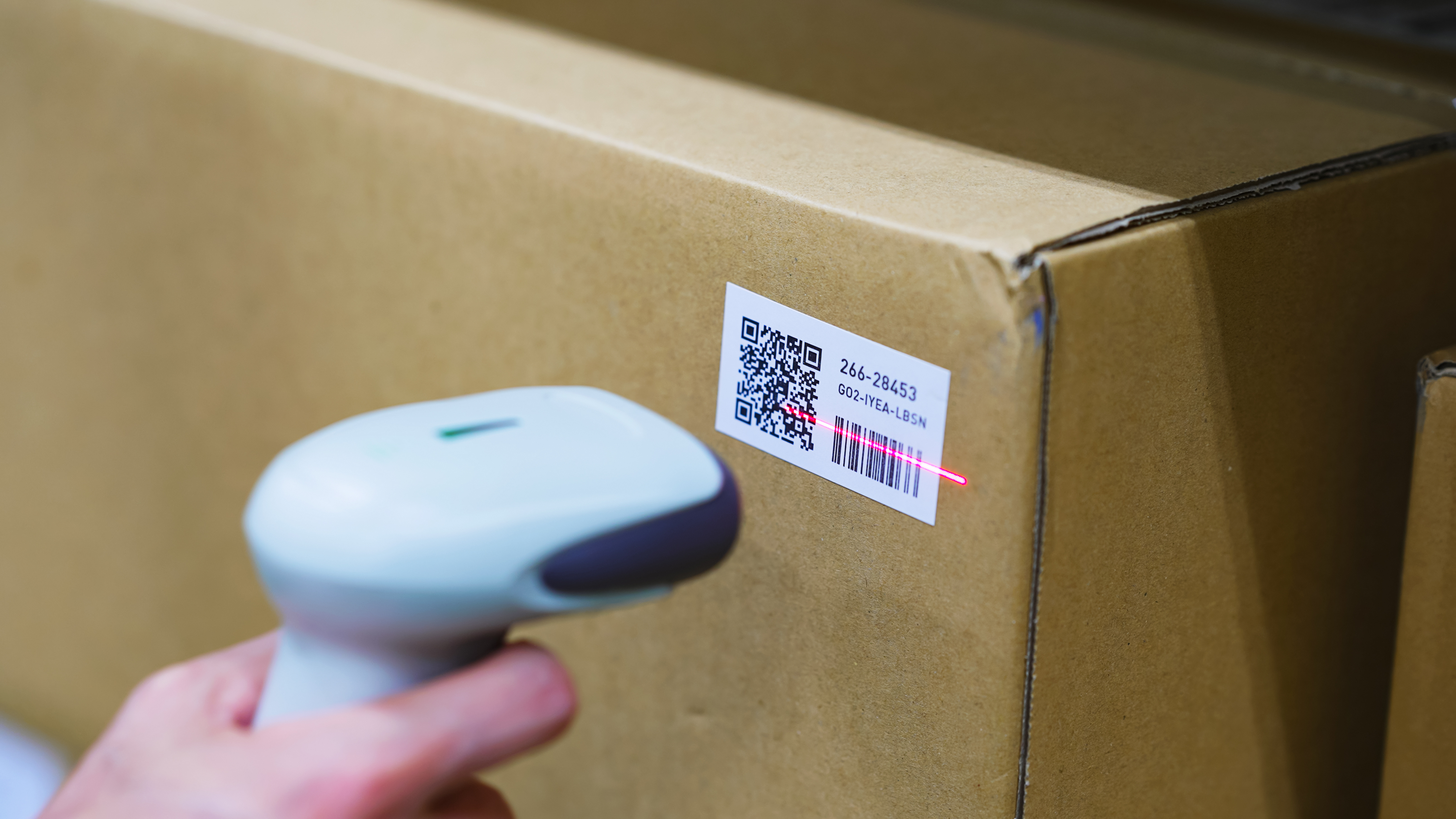
RFID, NFC, QR Codes or 2D Barcodes? Choosing the Right Technology for Connected Packaging
Packaging is becoming more than a way to identify and protect a product. Today, labels and packages can connect products to data, improve supply chain visibility, support authentication, and give consumers access to additional information.
That is where smart packaging comes in.
RFID, NFC, QR codes and 2D barcodes can all add digital capabilities to packaging, but they are not interchangeable technologies. Each serves different purposes, from automated inventory tracking to consumer engagement and product traceability.
With GS1’s Sunrise 2027 initiative accelerating the industry’s transition toward next-generation 2D barcodes at retail point of sale, brand owners have more options than ever for connecting physical products to digital information.
So which technology is right for your packaging?
The answer depends on what you want your packaging to do.
Key Takeaways
- RFID is well suited for automated inventory tracking, supply chain visibility and asset identification.
- NFC enables close-range, smartphone-based interactions between consumers and products.
- QR codes provide an easy way to connect consumers to digital content and can incorporate GS1 Digital Link.
- 2D barcodes, including QR codes and GS1 DataMatrix, can carry more information than traditional 1D barcodes and support applications such as traceability and product identification.
- Sunrise 2027 is driving broader adoption of 2D barcode-capable retail POS systems, but the transition will happen gradually.
- The best solution depends on the application, packaging structure, data requirements, scanning environment and desired user experience.
What Is Connected or Smart Packaging?
Smart packaging uses technology to add functionality or connectivity to a package or label.
That technology can allow a package to:
- Identify an individual product
- Track products through a supply chain
- Provide additional product information
- Support inventory management
- Connect consumers to digital content
- Help authenticate products
- Capture or share product-specific information
- Support traceability and regulatory requirements
A smart label does not necessarily have to look different from a traditional label. Technologies such as RFID and NFC can be embedded directly into a label construction, while QR codes and other 2D barcodes can be printed as part of the package artwork.
Inovar supports RFID and NFC smart label solutions that can be incorporated into custom label constructions for applications ranging from inventory tracking to consumer engagement. Learn more about Inovar’s RFID & NFC solutions.
RFID: Built for Automated Tracking and Visibility
Radio frequency identification (RFID) uses radio waves to communicate between an RFID tag and a reader.
Unlike a traditional barcode, an RFID tag does not generally require direct line-of-sight scanning. Multiple tagged products can also be read within a scanning environment, making RFID useful for applications where automated identification and inventory visibility are important.
RFID can be used for:
- Inventory management
- Warehouse and distribution tracking
- Retail inventory visibility
- Asset tracking
- Supply chain applications
- Retail compliance
- Product identification
An RFID label can incorporate an RFID inlay directly into the label construction, allowing the smart component to become part of the finished product label.
For example, Inovar produces RFID labels with embedded inlays and supports customers through tag selection, testing, encoding and ARC-related approval processes. Explore Inovar’s RFID label capabilities.
When RFID Makes Sense
RFID may be worth considering when a business needs to automatically identify and track products, cases or assets without relying exclusively on individual barcode scans.
The technology is particularly relevant when inventory accuracy, automation or supply chain visibility are major priorities.
However, RFID performance can depend on the product and packaging environment. Materials such as metal and liquids can affect RFID performance, which is why label construction and application testing are important parts of an RFID project.
NFC: Connecting the Product to the Consumer
Near-field communication (NFC) is another form of wireless communication, but it is designed for very short-range interactions.
NFC-enabled packaging can allow a consumer to tap a smartphone against a product to access digital content.
Potential applications include:
- Product information
- Instructions for use
- Promotions
- Loyalty programs
- Authentication
- Brand experiences
- Digital content
- Product-specific information
NFC can be especially useful when the goal is to create an intentional interaction between a consumer and the physical product.
QR Codes: A Familiar Path to Digital Content
QR codes have become one of the most recognizable forms of connected packaging.
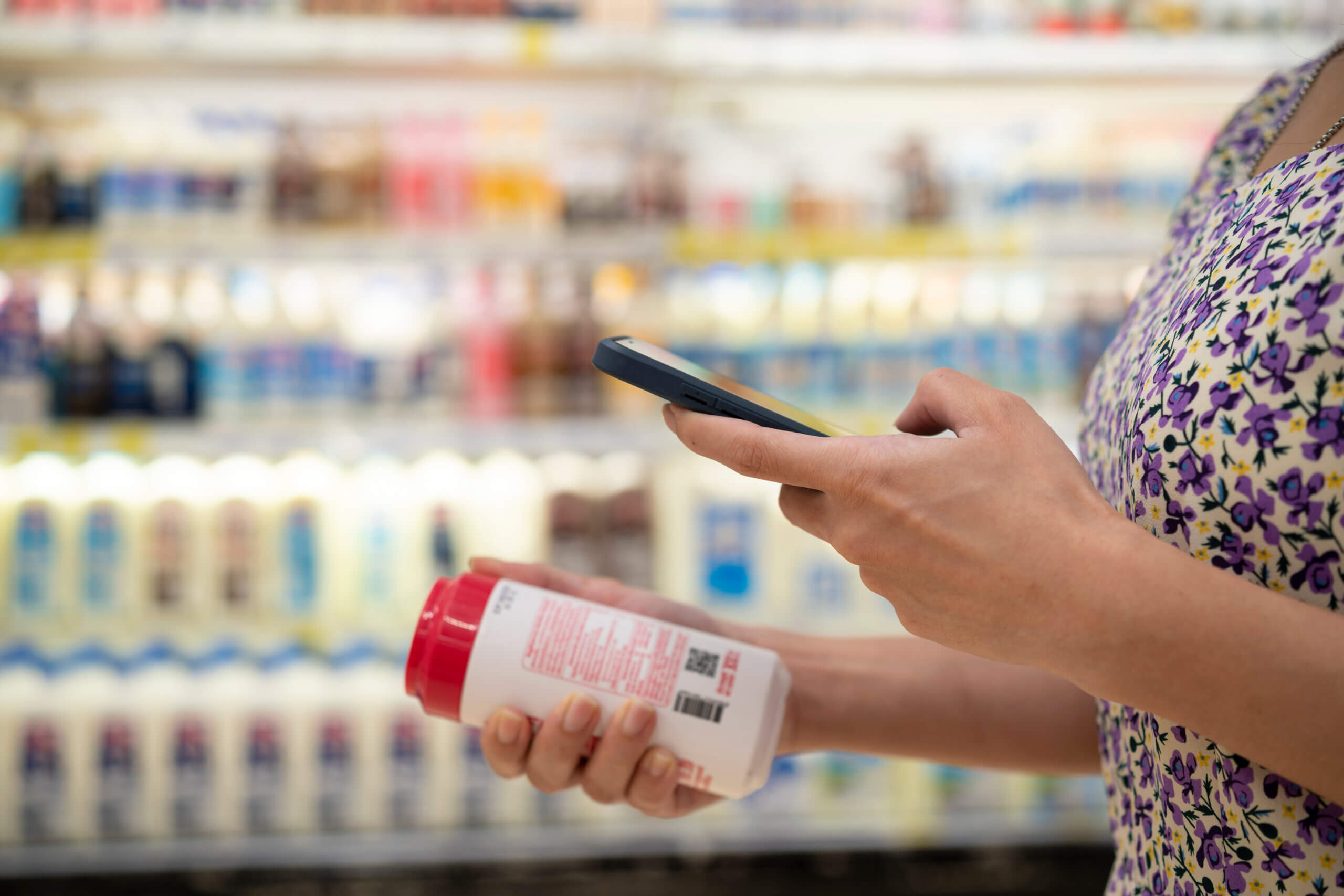
A consumer can scan a QR code with a smartphone camera and be directed to a website, product information, promotional content or another digital experience.
For brands, QR codes can provide a relatively simple way to connect a physical package to a digital destination without requiring specialized hardware.
QR codes can also be used with GS1 Digital Link, which allows a GS1 identifier to connect a product to online information and services.
That creates opportunities to connect packaging with information such as:
- Product details
- Ingredients and allergens
- Instructions
- Recycling information
- Promotions
- Product-specific content
- Traceability information
2D Barcodes and the Move Toward Sunrise 2027
The next major development in connected packaging is the broader adoption of 2D barcodes.
Traditional UPC and EAN barcodes are one-dimensional, or 1D, barcodes. They primarily encode a product identifier.
2D barcodes can hold more data in a smaller space and can support additional information such as batch or lot numbers, expiration dates and serial numbers, depending on the implementation.
Common 2D barcode formats include:
- QR Codes with GS1 Digital Link
- GS1 DataMatrix
- Other GS1-compliant 2D barcode implementations
GS1’s Sunrise 2027, also known as Ambition 2027, is an industry initiative aimed at having retail point-of-sale systems globally capable of reading and processing defined GS1-standard 2D barcodes alongside existing 1D barcodes by the end of 2027.
That distinction is important.
Sunrise 2027 does not mean every existing UPC suddenly becomes obsolete in 2027. GS1 expects the transition to happen gradually, with 1D and 2D barcodes continuing to coexist during the transition.
For brands, that means now is a useful time to start evaluating how 2D barcodes could fit into future packaging, labeling and data strategies.
RFID vs. NFC vs. QR Codes vs. 2D Barcodes
| Technology | Primary Use | How It Is Read | Common Applications |
| RFID | Automated identification and tracking | RFID reader | Inventory, supply chain, retail, asset tracking |
| NFC | Short-range product interaction | NFC-enabled smartphone or reader | Consumer engagement, authentication, digital content |
| QR Code | Digital access and product information | Smartphone camera or scanner | Marketing, product information, digital experiences |
| 2D Barcode | Product identification and data | 2D barcode scanner/camera | Retail POS, traceability, lot/serial data, product information |
The technologies can also work together.
For example, a product could use RFID for supply chain tracking while also using a QR code powered by GS1 Digital Link to provide consumer-facing product information.
The right approach is not necessarily about choosing one technology and eliminating the others. It is about matching the data carrier to the job it needs to perform.
How Should Brands Choose?
Before adding a smart technology to a package, consider five questions.
1. Who needs to interact with the technology?
Is the primary user:
- A warehouse employee?
- A retailer?
- A supply chain system?
- A brand?
- A consumer?
RFID may make sense for automated supply chain tracking, while NFC or a QR code may be better suited to direct consumer interaction.
2. How will the package be scanned?
Consider whether the package will be:
- Scanned individually
- Scanned in bulk
- Read automatically
- Scanned with a smartphone
- Read at a retail point of sale
The scanning environment can significantly influence which technology makes sense.
3. What information needs to be connected to the product?
A basic product identifier has different requirements than a system that needs to associate a product with batch, lot, expiration or serial information.
2D barcodes can support significantly more data than traditional linear barcodes, while RFID can provide automated identification and tracking capabilities.
4. What does the packaging look like?
Label size, substrate, product material, application location and package geometry can all influence technology selection.
This is particularly important for RFID. Metal and liquid environments, for example, can affect RFID performance.
5. What does the future look like?
Packaging technology should not be evaluated only for today’s requirements.
With the continued development of connected packaging and the industry’s movement toward 2D barcode adoption, brands may want to consider how their packaging data strategy can support future retail, supply chain and consumer needs.
Smart Packaging Starts With the Label
Connected packaging does not have to mean completely redesigning a package.
In many applications, the label can serve as the bridge between the physical product and digital information.
That may mean:
- Embedding an RFID inlay into a prime label
- Incorporating an NFC tag
- Printing a QR code
- Adding a GS1-compliant 2D barcode
- Combining technologies within a single packaging system
At Inovar, we approach smart packaging from the perspective of the complete label construction, not simply the technology itself.
Our team can help evaluate label format, materials, RFID or NFC technology, printing requirements and application considerations to develop a solution suited to the product and its intended use.
Inovar’s Innovation Lab can also support prototyping and testing as brands explore new label and packaging technologies.
Preparing for the Next Generation of Packaging
The future of connected packaging is not one-size-fits-all.
RFID can provide automated visibility across supply chains. NFC can create direct, intentional interactions between products and consumers. QR codes can connect packaging to digital experiences. And 2D barcodes are opening new possibilities for product identification, traceability and information sharing as the industry moves toward Sunrise 2027.
For brands, the opportunity is to determine which technology, or combination of technologies, best supports the product’s needs.
The smartest package is not necessarily the one with the most technology. It is the one using the right technology for the job.
Frequently Asked Questions
What is smart packaging?
Smart packaging incorporates technology into a package or label to provide additional functionality, connectivity, identification, tracking or consumer interaction. Examples include RFID, NFC and 2D barcode technologies.
What is the difference between RFID and NFC?
RFID is commonly used for automated identification and tracking applications, while NFC is designed for very short-range communication and is commonly used for consumer-facing interactions. NFC is a type of RFID technology, but the terms are not interchangeable in practical packaging applications.
What is a 2D barcode?
A 2D barcode is a two-dimensional machine-readable code that can encode more information than traditional linear barcodes. Examples include QR codes and GS1 DataMatrix.
What is Sunrise 2027?
Sunrise 2027, also known as GS1 Ambition 2027, is an industry initiative to enable retail point-of-sale systems around the world to read and process defined GS1-standard 2D barcodes alongside existing 1D barcodes by the end of 2027. The transition is expected to occur gradually.
Do 2D barcodes replace UPC barcodes?
Not immediately. GS1 expects 1D and 2D barcodes to coexist during the transition as retailers and brands adopt systems capable of processing 2D barcodes.
Can RFID and 2D barcodes be used together?
Yes. Different technologies can serve different purposes within the same packaging system. For example, RFID can support automated inventory tracking while a GS1-enabled QR code can connect consumers or other users to digital product information.
Can RFID be incorporated into a product label?
Yes. RFID inlays can be embedded into custom label constructions. Inovar produces RFID-enabled labels and supports customers with tag selection, testing, encoding and approval processes.
What should I consider before adding RFID or another smart technology to my packaging?
Start with the application. Consider who will scan the package, what information needs to be captured or accessed, where the package will be scanned, the materials and construction of the package, and how the solution needs to scale.
Ready to Explore Smart Packaging?
Whether you’re evaluating RFID for inventory visibility, NFC for consumer engagement or 2D barcodes as part of your Sunrise 2027 strategy, the label can be an important part of the solution.
THE LATEST FROM INOVAR
WE'RE HERE TO SERVE YOU
Creating and producing labels can be overwhelming, but our experts are here to guide you every step of the way. Whether you have a project ready to go, have questions about label applications or materials, or want to learn more about our services, our team is ready to assist you.