



The Hidden Cost of Label Buildup on Reusable Containers
Reusable containers, totes, bins, racks, drums, and bulk containers are designed to serve a purpose over and over again.
That repeated use can help organizations improve material efficiency and reduce the need for disposable packaging. But there is another part of the reuse cycle that can become a problem over time: labeling.
When a container is used for one product, labeled, shipped, emptied, cleaned, and then assigned to something else, the label needs to change too.
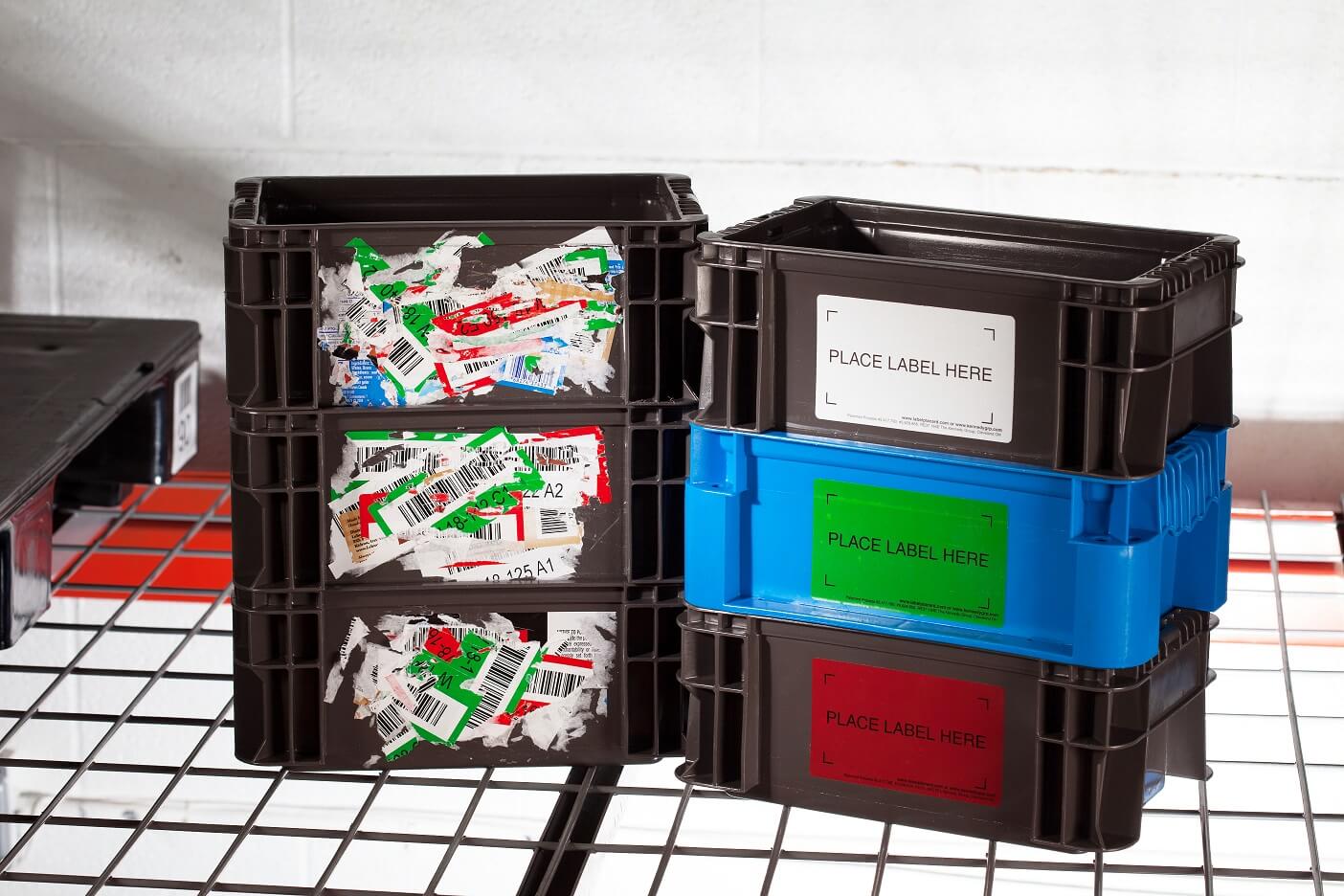
If the old label does not come off cleanly, the result can be layers of labels, adhesive residue, scraping, cleaning, and confusion over which information is current.
The individual label may seem like a small expense. Across hundreds or thousands of reusable containers and repeated handling cycles, however, the labor and operational impact can add up.
Key Takeaways
- Label buildup on reusable containers can create hidden labor, cleanup, and identification costs over repeated reuse cycles.
- Old labels, adhesive residue, and overlapping information can make it harder to identify current container contents and maintain accurate tracking.
- Reusable packaging works best when the labeling strategy is designed around repeated use, cleaning, relabeling, and changing information.
- Placard labels can provide a dedicated, reusable surface for changing labels, helping reduce buildup directly on containers.
- The right labeling solution depends on factors such as reuse frequency, container surface, cleaning process, environmental conditions, and identification requirements.
What Happens When Labels Build Up?
Imagine a reusable tote moving through a manufacturing or distribution operation.
It may be used for one product today and another product next week. Each time the contents change, the identification needs to change with it.
With a traditional labeling approach, the process may look something like this:
Apply label → use container → remove label → scrape residue → clean surface → apply new label
Repeat that process dozens or hundreds of times, and the labeling surface can become increasingly difficult to manage.
Old labels may overlap. Adhesive can remain on the container. Employees may spend additional time preparing the surface before a new label can be applied.
Eventually, something that started as a simple identification task becomes a recurring operational issue.
The Labor Cost Can Be Easy to Miss
Label removal is rarely tracked as its own line item.
Instead, the time may be absorbed into other activities such as:
- Container preparation
- Warehouse cleanup
- Production support
- Shipping and receiving
- Quality control
- Maintenance
- Material handling
That can make the true cost difficult to identify.
Consider an operation with hundreds of reusable containers. If employees spend even a small amount of additional time removing labels or cleaning adhesive from each container, those minutes can accumulate across the entire operation.
The question becomes less about “How much does the label cost?” and more about:
“How much does it cost every time we have to deal with the label?”
Label Buildup Can Create More Than a Mess
The visual appearance of a reusable container may seem like a minor concern, but excessive label buildup can create practical problems.
When old labels remain on a container, employees may have difficulty determining which information applies to the current contents.
That can contribute to:
- Slower identification
- Confusion during changeovers
- Incorrect product identification
- Additional inspection
- Shipping or receiving errors
- More time spent cleaning containers
For operations where accurate identification is critical, a clean labeling surface can be much more than an aesthetic improvement.
Barcode Readability Matters, Too
Reusable containers are increasingly part of connected supply chains.
Barcodes, QR codes, RFID, and other identification technologies can help organizations track products, containers, and assets as they move through manufacturing and distribution.
GS1’s Global Returnable Asset Identifier, or GRAI, is specifically designed for identifying reusable transport items and can support tracking and sorting of returnable assets.
That makes the physical labeling surface increasingly important.
If a new barcode is applied over an old label, if information is obscured, or if employees cannot quickly identify the current label, the labeling system can become a weak point in an otherwise efficient tracking process.
Reusable Packaging Requires Reusable Thinking
The concept behind reusable packaging is straightforward: keep a container in service instead of replacing it after every use.
The labeling strategy should support that same philosophy.
A reusable container may go through:
Fill → Ship → Empty → Clean → Relabel → Reuse
The label needs to fit into that cycle.
This is particularly important for applications involving:
- Plastic totes
- Bulk containers
- Industrial bins
- Drums
- Trays
- Pallets
- Racks
- Agricultural containers
- Automotive containers
The right labeling approach depends on the container, environment, number of reuse cycles, and type of information that needs to change.
What Is a Placard Label?
One approach is to create a dedicated labeling surface on the reusable container.
A placard label holder provides a durable area where temporary or changing labels can be applied and removed without placing each new label directly on the container itself.
Inovar’s placard solutions are designed specifically for reusable containers, bins, totes, racks, and similar applications where frequent relabeling is required. The system allows adhesive-backed labels to be applied and removed from the placard surface, helping reduce the need to scrape labels directly from the container.
This changes the labeling process from repeatedly applying and removing labels from the container to using a dedicated, reusable labeling surface.
The Goal Is Not Just Cleaner Containers
A cleaner container is a visible benefit, but the bigger opportunity is operational.
A dedicated labeling surface can help organizations:
- Simplify relabeling
- Reduce cleanup associated with label removal
- Keep current information easier to identify
- Reduce overlapping labels
- Support more consistent container identification
- Improve the overall appearance of reusable assets
Inovar’s placard solutions are designed for repeated application and removal of labels, with options for different surfaces, environments, temperatures, and container types.
A Real-World Example: Seed Totes
This challenge is not theoretical.
Inovar recently worked with an agricultural customer that was experiencing problems with labeling reusable seed totes. The existing process created sticky buildup and made it difficult for employees to determine which label corresponded to the current contents.
Inovar developed a custom placard solution that created a dedicated surface for the seed-specific labels. The labels could then be removed and replaced without leaving the same buildup directly on the tote.
The customer reported faster container preparation, less cleanup, improved product identification, and reduced labor associated with removing old labels.
Choosing the Right Labeling Strategy
Not every reusable container requires the same solution.
Before changing a labeling system, organizations should consider:
How often is the container relabeled?
A container that changes contents several times a week has different requirements than one that is relabeled once every few months.
What environment does it operate in?
Consider exposure to:
- Water
- Cleaning processes
- Chemicals
- Freezing temperatures
- Heat
- Outdoor conditions
- Abrasion
What information needs to change?
Some applications may require basic product identification. Others may need barcodes, QR codes, lot information, or serialized tracking.
How is the container cleaned?
If containers go through repeated wash cycles, the labeling system needs to be evaluated for that environment.
How important is traceability?
If containers are tracked throughout a supply chain, the labeling system needs to support reliable identification and scanning.
These considerations can help determine whether a traditional label, removable label, placard, RFID solution, or another identification method makes the most sense.
Labeling Can Be Part of the Reuse Strategy
Reusable packaging is ultimately about getting more value from the assets already in circulation.
But reuse works best when the processes surrounding the container are designed for repeated use too.
That includes cleaning, transportation, storage, tracking, maintenance, and labeling.
A container may be built to survive hundreds of trips, but if its labeling system requires significant labor every time the contents change, there may be an opportunity to improve the overall process.
How Inovar Helps Solve Reusable Container Labeling Challenges
Our placard solutions are designed for reusable containers and material handling applications where labels need to be changed frequently. Options are available for different container surfaces and operating environments, including applications involving wash cycles, cold temperatures, and rugged industrial conditions.
Our team can help evaluate:
- Container surface and construction
- Label frequency
- Adhesive requirements
- Environmental exposure
- Barcode and identification needs
- Cleaning processes
- Reuse cycles
- Overall labeling workflow
The Bottom Line
Label buildup on reusable containers can be easy to overlook because the cost is spread across many small tasks.
A few extra minutes spent removing labels. A little more time cleaning adhesive. Another inspection to determine which label is current. An occasional identification error.
Individually, these issues may seem minor.
Across a large reusable container program, however, they can become an ongoing operational expense.
The right labeling strategy can help simplify that process by giving changing information a dedicated, durable place to go.
For organizations looking to get more value from reusable containers, it may be worth taking a closer look at the label. Sometimes the hidden cost isn’t the label itself. It’s everything that happens after it is applied.
THE LATEST FROM INOVAR

WE'RE HERE TO SERVE YOU
Creating and producing labels can be overwhelming, but our experts are here to guide you every step of the way. Whether you have a project ready to go, have questions about label applications or materials, or want to learn more about our services, our team is ready to assist you.