


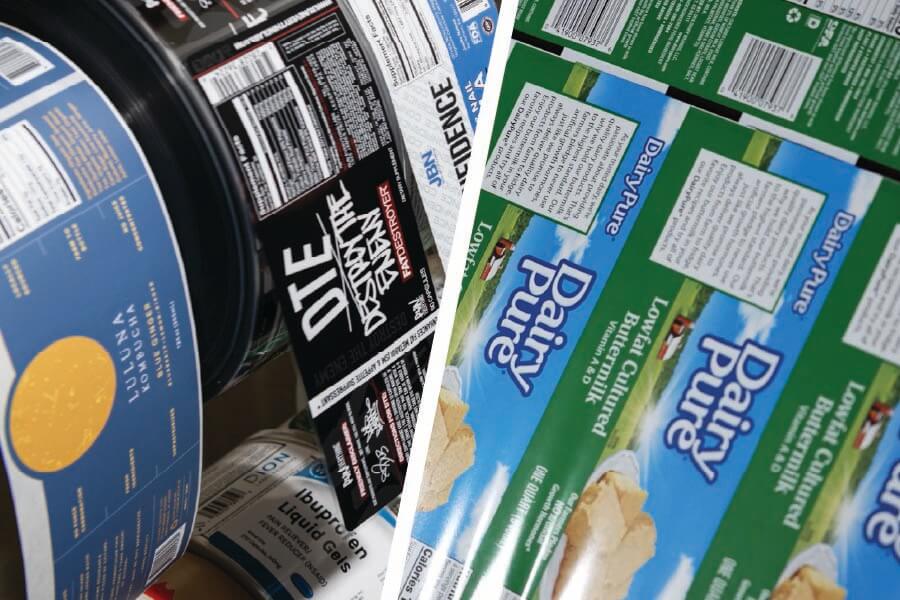
Roll-Fed Labels vs. Pressure-Sensitive Labels: Which Is Right for Your Production Line?
Key Takeaways
- Roll-fed labels are often a strong fit for high-volume production lines that prioritize application speed, consistent wraparound coverage, and reduced label liner waste.
- Pressure-sensitive labels offer flexibility in label shapes, materials, adhesives, and decorative finishes, making them suitable for a wide range of products and applications.
- The right labeling method depends on production volume, container design, application equipment, product environment, and overall packaging requirements.
- Per-label cost is only one consideration. Equipment, changeovers, material waste, production downtime, and inventory needs can also affect total operating cost.
- Testing both options against your actual production requirements can help determine which solution offers the best balance of performance, efficiency, and appearance.
Choosing the Right Labeling Method for Your Production Line
Choosing a label is about more than selecting the right material or designing attractive graphics. The labeling method can influence production speed, operating costs, packaging appearance, and how efficiently your line runs.
Two common options are roll-fed labels and pressure-sensitive labels. Both can deliver high-quality graphics and durable performance, but they differ in how they are constructed and applied.
Roll-fed labels are supplied in continuous rolls and typically use adhesive applied during the labeling process. Pressure-sensitive labels have adhesive already applied to the label and are dispensed from a release liner before being pressed onto the container.
Understanding these differences can help packaging teams make more informed decisions when selecting a label for a new product, upgrading equipment, or evaluating production efficiency.
What Are Roll-Fed Labels?
Roll-fed labels are supplied as continuous rolls of printed film. During application, a labeling machine feeds the material, cuts individual labels, applies adhesive, and wraps each label around the container.
This process makes roll-fed labeling particularly suitable for high-volume operations where speed and consistent application are important.
Roll-fed labels are commonly used for beverages, personal care products, household products, and other applications that benefit from wraparound graphics.
Key benefits include:
- High-speed application: Designed for production environments that require large quantities of labeled containers.
- Efficient roll usage: Continuous rolls can reduce the frequency of label changes during production.
- Wraparound graphics: Labels can provide extensive coverage around cylindrical containers.
- No release liner: The construction does not require the conventional backing liner used with pressure-sensitive labels.
- Durable options: Film materials and optional finishes can support products exposed to moisture, refrigeration, and other demanding conditions.
Roll-fed labeling does require compatible application equipment and a suitable container design. It is especially worth evaluating when a business runs large quantities of products with consistent labeling requirements.
Explore Inovar’s roll-fed label solutions to learn more about available materials, printing capabilities, finishes, and applications.
What Are Pressure-Sensitive Labels?
Pressure-sensitive labels have a pre-applied adhesive that bonds to a surface when pressure is applied. The labels are supplied on a release liner, which is removed during application.
This format is widely used because it accommodates a broad range of products, container shapes, materials, and design requirements.
Pressure-sensitive labels are available in paper, film, metallized, and specialty constructions. Depending on the application, they can also incorporate features such as foil stamping, embossing, tactile varnishes, and custom die-cut shapes.
Key benefits include:
- Design flexibility: Supports a wide range of shapes, sizes, materials, and decorative effects.
- Broad application range: Suitable for many flat, curved, and contoured surfaces when the label construction is properly selected.
- Adhesive options: Permanent, removable, and specialty adhesives can address different application needs.
- Short- and long-run versatility: Digital and hybrid printing options can support changing artwork, multiple SKUs, and customized designs.
- Application flexibility: Depending on the equipment and product, pressure-sensitive labels may be applied automatically or manually.
Pressure-sensitive labels can be a strong choice for brands managing many products, complex artwork, frequent design changes, or specialized labeling requirements.
Learn more about Inovar’s pressure-sensitive label capabilities.
Roll-Fed Labels vs. Pressure-Sensitive Labels: A Side-by-Side Comparison
The best labeling method depends on how the product is manufactured, packaged, and distributed. This table summarizes the primary differences.
| Consideration | Roll-Fed Labels | Pressure-Sensitive Labels |
| Application method | Cut from a continuous roll and typically glued during application | Dispensed from a release liner and applied using pressure |
| Production volume | Often best suited to high-volume runs | Flexible across short, medium, and long runs |
| Application speed | Well suited to high-speed labeling lines | Depends on the labeler, container, and line requirements |
| Label shape | Commonly used for wraparound designs | Supports a wide range of custom shapes and sizes |
| Design flexibility | Supports full-color graphics, finishes, and selected specialty constructions | Supports extensive material, shape, and embellishment options |
| Adhesive | Typically applied during the labeling process | Pre-applied to the label |
| Release liner | No conventional release liner | Conventional constructions use a release liner |
| Container compatibility | Particularly useful for compatible containers and wraparound applications | Suitable for many surfaces and container shapes with the correct construction |
| Cost considerations | Can be economical for high-volume production | Can offer flexibility across different run lengths and specifications |
| Changeovers | Long rolls can reduce changeover frequency | Changeover frequency depends on roll length, SKU mix, and equipment |
| Sustainability considerations | Eliminates conventional label liner waste | Conventional constructions generate liner waste, though recyclable and specialty options may be available |
These are general comparisons, not fixed rules. Equipment capabilities, label construction, order quantities, and the production environment can affect the outcome.
1. Which Labeling Method Is Better for High-Speed Production?
If your production line runs large quantities of the same product, roll-fed labels are worth serious consideration.
Continuous rolls can support fast application and reduce interruptions caused by changing label rolls. This can be valuable for beverage manufacturers and other businesses running high-volume container lines.
However, application speed depends on more than the label itself. Container handling, filling speeds, machine configuration, changeover procedures, and quality checks all influence actual line performance.
Pressure-sensitive labeling can also support automated, high-speed production. The question is whether the specific label construction and application equipment can consistently meet your required line speed.
Before choosing, compare:
- Required containers per minute
- Actual labeling speed under production conditions
- Label roll length and changeover frequency
- Setup time when switching SKUs
- Reject rates and rework
- Equipment compatibility and maintenance requirements
Best fit: Roll-fed labels are often attractive for high-volume, consistent production. Pressure-sensitive labels may be better when the product mix or labeling requirements call for greater flexibility.
2. How Does Production Volume Affect Labeling Costs?
The lowest quoted cost per label does not always translate into the lowest total cost of labeling.
Roll-fed labels can offer an economic advantage for large runs because of their application efficiency and linerless construction. Pressure-sensitive labels may provide better overall value for products requiring custom shapes, specialty materials, frequent artwork changes, or shorter runs.
To compare costs fairly, consider the complete production process:
- Cost per finished label
- Label application equipment and operating costs
- Adhesive or other application consumables
- Changeover labor and production downtime
- Label waste and rejected containers
- Inventory requirements for different SKUs
- Artwork changes and setup requirements
For example, a manufacturer producing millions of identical beverage containers may prioritize the efficiencies of roll-fed labeling. A personal care brand managing dozens of products with different bottle shapes, colors, and decorative requirements may benefit from pressure-sensitive labels.
Neither option is automatically less expensive. The result depends on the application and the full cost of getting finished, correctly labeled products off the line.
Best fit: Compare total cost per successfully labeled container rather than relying solely on the quoted price per label.
3. Which Option Offers More Design Flexibility?
Both labeling technologies can deliver strong graphics and shelf appeal, but their capabilities differ.
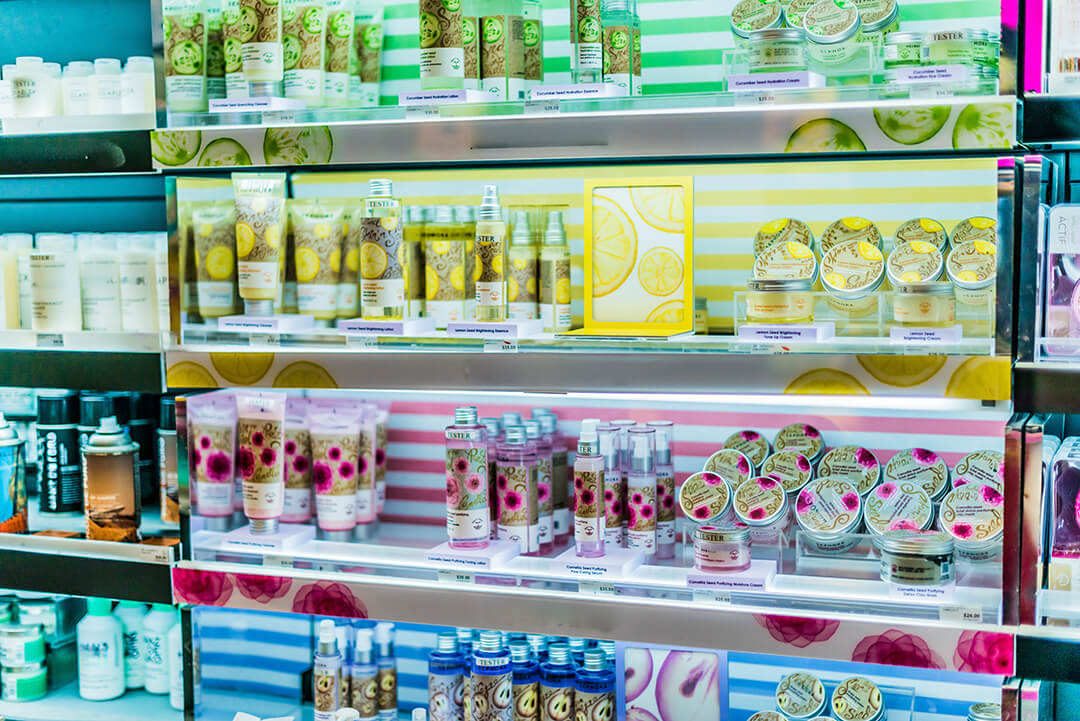
Roll-fed labels can provide extensive wraparound coverage, making them useful for designs that benefit from a large printable area around the container. Modern printing technologies can also support variable graphics, multiple finishes, and specialty effects in suitable constructions.
Pressure-sensitive labels offer a particularly broad range of label shapes, substrates, adhesives, and embellishments. These options can help brands differentiate products with custom shapes, foil, tactile finishes, and other design details.
When evaluating design flexibility, ask:
- Does the package need extensive wraparound coverage?
- Does the design require a custom label shape?
- Are specialty finishes important to the brand?
- Will the artwork change frequently?
- Are multiple SKUs sharing a similar label format?
- Does the container have curves or contours that affect label placement?
Best fit: Roll-fed labels are often a good choice for wraparound designs and consistent high-volume products. Pressure-sensitive labels are worth considering when custom shapes, specialized finishes, and SKU flexibility are priorities.
4. How Do Container Shape and Label Application Affect the Decision?
The container itself can determine which labeling method is practical.
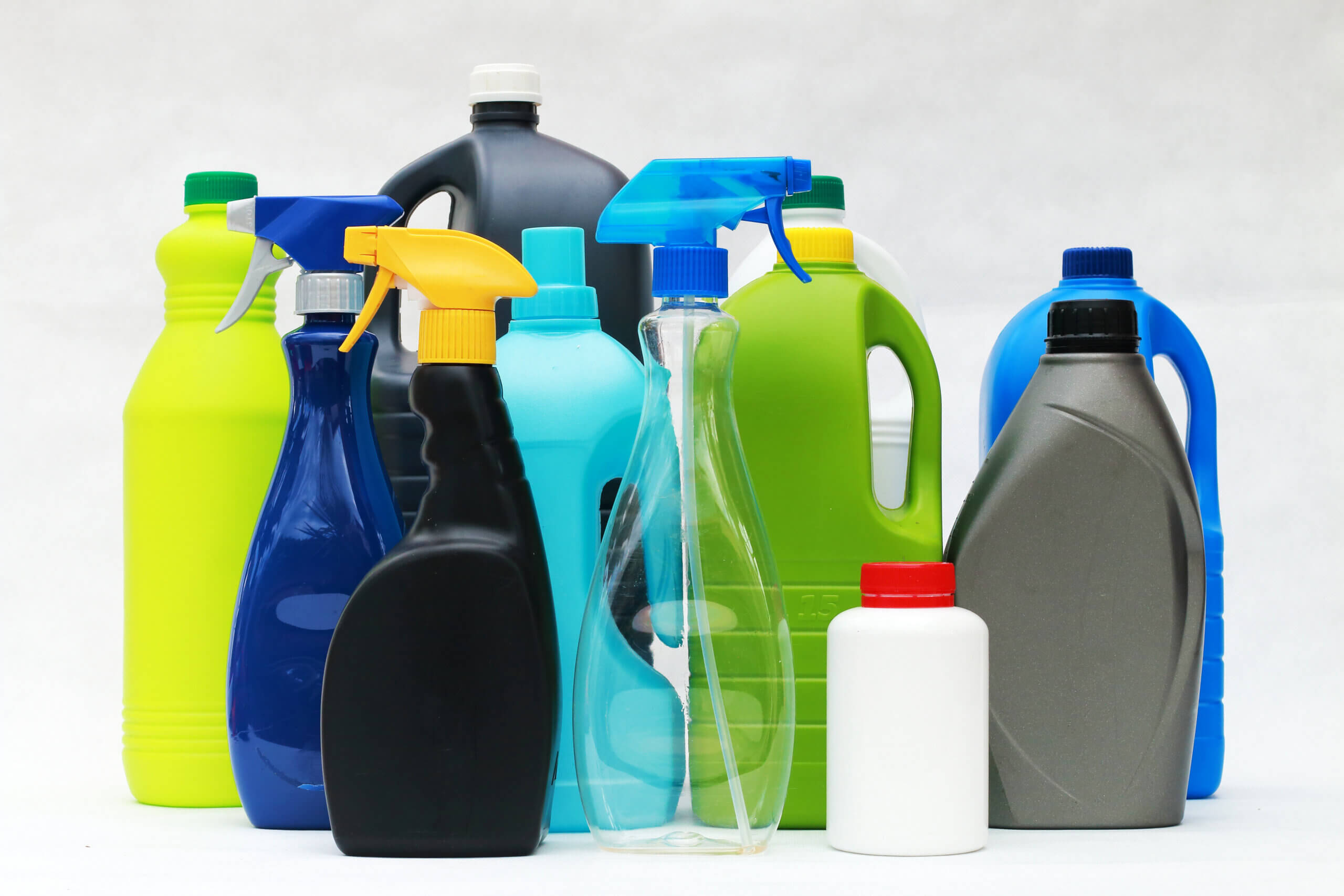
Roll-fed labels are commonly used on compatible bottles, cans, and cylindrical containers where wraparound coverage is desired. Pressure-sensitive labels can accommodate a wider range of surfaces, including many flat, curved, and contoured areas, depending on the label material and adhesive.
Both formats require appropriate equipment and careful evaluation of the package geometry.
Consider whether the container has:
- A consistent cylindrical shape
- A tapered body or narrow neck
- Pronounced curves or contours
- A textured or embossed surface
- A surface material that requires a specific adhesive
- A limited area available for label placement
If a bottle has a complex shape, a pressure-sensitive label may provide more options for positioning and custom sizing. In some cases, a shrink sleeve may be worth evaluating if the design requires graphics across more complex contours.
Best fit: Match the label format to the actual container and application equipment, rather than selecting a label based on appearance alone.
5. Which Label Type Performs Better in Challenging Environments?
The finished product may encounter moisture, condensation, refrigeration, heat, sunlight, chemicals, or abrasion during its lifecycle.
Both roll-fed and pressure-sensitive labels can be designed for demanding environments, but performance depends on the specific material construction, adhesive system, protective finish, and application conditions.
For example, a refrigerated beverage may require a label that maintains its appearance in cold, wet conditions. A household chemical container may need resistance to specific chemicals. A personal care product may require a label that withstands moisture and repeated handling.
When reviewing options, identify:
- Environmental conditions during label application
- Temperature and humidity during storage
- Exposure to moisture, condensation, or chemicals
- Expected abrasion and handling
- Required durability and print protection
- Container material and surface condition
Avoid assuming that all film labels or all pressure-sensitive adhesives provide the same level of performance. The complete construction should be selected for the intended use.
Best fit: Either format can work in demanding conditions when properly specified and validated. Testing the label on the actual container is an important part of the selection process.
6. Which Labeling Method Supports Your Sustainability Goals?
Sustainability is another factor to consider when comparing label formats.
Roll-fed labels do not require the conventional release liner associated with pressure-sensitive labels. This can reduce label-related liner waste and may offer operational benefits for high-volume applications.
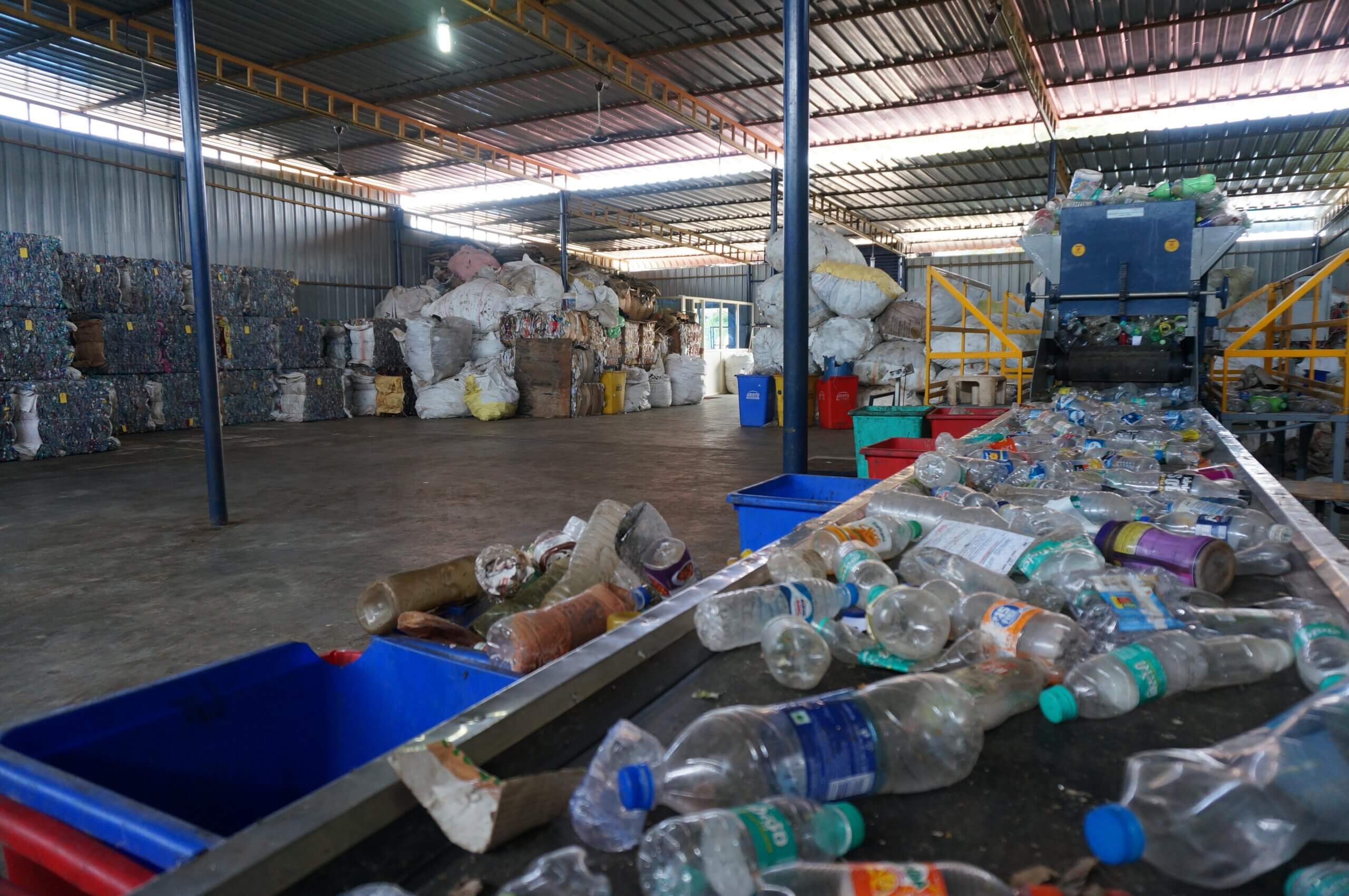
Pressure-sensitive labels, however, are available in constructions designed to support packaging recyclability. Specialized adhesives can allow certain labels to separate from PET containers during recycling, depending on the complete construction and the applicable recycling process.
The right choice depends on the container material, label substrate, adhesive, ink system, and recycling infrastructure.
When reviewing sustainability, consider:
- Whether the label uses a conventional release liner
- The amount and type of label material used
- The compatibility of the label with the primary container
- Whether the label is designed to separate during recycling
- Applicable recyclability guidance and testing
- Whether sustainability claims are supported by evidence for the specific construction
Inovar’s sustainable and recyclable label solutions include roll-fed and pressure-sensitive options designed with packaging recyclability considerations in mind.
For additional technical guidance, the Association of Plastic Recyclers provides resources for evaluating the compatibility of plastic packaging components with recycling processes.
Best fit: Evaluate sustainability at the complete-package level. Neither label format should automatically be considered more recyclable in every application.
7. How Will Your Current and Future Product Mix Affect the Choice?
The right labeling method should work for today’s production requirements while accommodating realistic future needs.
A manufacturer with a small number of high-volume SKUs may have different priorities from a brand launching frequent seasonal products, adding new container shapes, or expanding into additional product categories.
Think about how your product mix may change over the next few years.
Ask:
- How many SKUs will the line run?
- How often will artwork or product information change?
- Are shorter promotional runs likely?
- Will the business introduce new bottle shapes or sizes?
- Can existing equipment accommodate the intended label format?
- What would be required to switch between label constructions?
Pressure-sensitive labels can be useful for brands that need frequent design changes or a wide range of specifications. Roll-fed labels can be attractive for stable, high-volume production where efficient application is a priority.
The right decision should account for the entire production plan, not just the first product launch.
How to Choose the Right Label for Your Production Line
Before making a final decision, compare your requirements against the strengths of each format.
Roll-fed labels may be the better fit if:
- You run high volumes of compatible containers.
- Fast, consistent application is a major priority.
- Your products benefit from wraparound graphics.
- Reducing conventional label liner waste is important.
- Your production equipment supports roll-fed application.
Pressure-sensitive labels may be the better fit if:
- You manage a wide range of SKUs or shorter production runs.
- Custom shapes and specialized finishes are important.
- Your products use different container materials or shapes.
- You need a broad selection of adhesive and substrate options.
- Your design or product specifications change frequently.
These are starting points, not strict rules. Both technologies can support a variety of applications, and the best choice depends on your production line, package design, and performance requirements.
Frequently Asked Questions
What is the main difference between roll-fed and pressure-sensitive labels?
Roll-fed labels are supplied in continuous rolls and typically have adhesive applied during the labeling process. Pressure-sensitive labels have pre-applied adhesive and are dispensed from a release liner before being pressed onto the container.
Are roll-fed labels cheaper than pressure-sensitive labels?
Roll-fed labels can be economical for high-volume production because of their application efficiency and lack of conventional release liners. Pressure-sensitive labels may offer better value for shorter runs, complex designs, or products requiring specialty materials. A fair comparison should include equipment, labor, downtime, waste, and the cost per successfully labeled container.
Which label type is best for high-speed production lines?
Roll-fed labels are often well suited to high-speed, high-volume production. Pressure-sensitive labels can also be applied automatically at production speeds appropriate for the equipment and application. Actual performance should be evaluated on the intended line.
Are pressure-sensitive labels more versatile than roll-fed labels?
Pressure-sensitive labels offer extensive options for shapes, adhesives, substrates, and decorative finishes. Roll-fed labels are particularly useful for wraparound designs and compatible high-volume applications. The more versatile choice depends on the container and design requirements.
Which label type is more sustainable?
Neither format is automatically more sustainable in every application. Roll-fed labels eliminate the conventional release liner, while specialized pressure-sensitive constructions may be designed to separate from certain containers during recycling. Material use, package compatibility, and the relevant recycling process all matter.
Can roll-fed and pressure-sensitive labels both be used on plastic bottles?
Yes. Both formats can be used on suitable plastic containers. The appropriate choice depends on the type of plastic, bottle geometry, adhesive or application method, production equipment, and required performance.
Find the Right Labeling Solution for Your Production Needs
Choosing between roll-fed and pressure-sensitive labels requires balancing production speed, total cost, design flexibility, container compatibility, and sustainability goals.
Roll-fed labels can be an excellent fit for high-volume lines that prioritize efficient wraparound application. Pressure-sensitive labels provide flexibility for brands with varied products, specialized designs, and diverse labeling requirements.
The most effective approach is to evaluate both options against your actual production conditions and long-term packaging plans.
Explore Inovar’s roll-fed label solutions and pressure-sensitive label capabilities to compare options for your application. Inovar can help your team evaluate materials, finishes, and labeling requirements to identify a solution that supports your product and production goals.
THE LATEST FROM INOVAR


WE'RE HERE TO SERVE YOU
Creating and producing labels can be overwhelming, but our experts are here to guide you every step of the way. Whether you have a project ready to go, have questions about label applications or materials, or want to learn more about our services, our team is ready to assist you.