



Shelf Impact vs. Sustainability: Can Brands Have Both?
Key Takeaways
- Sustainable packaging does not have to look plain, minimal, or less premium.
- Shelf impact and sustainability can be addressed together through material selection, structural design, printing, and finishing.
- The most sustainable packaging choice depends on the entire package system, not just one material or component.
- Lightweighting, material reduction, recyclability, and efficient package design can support sustainability without eliminating brand differentiation.
- Sustainability claims should be specific, accurate, and supported by the actual packaging construction.
- Testing materials and designs before a full production run can help brands find the right balance between visual impact, performance, and sustainability.
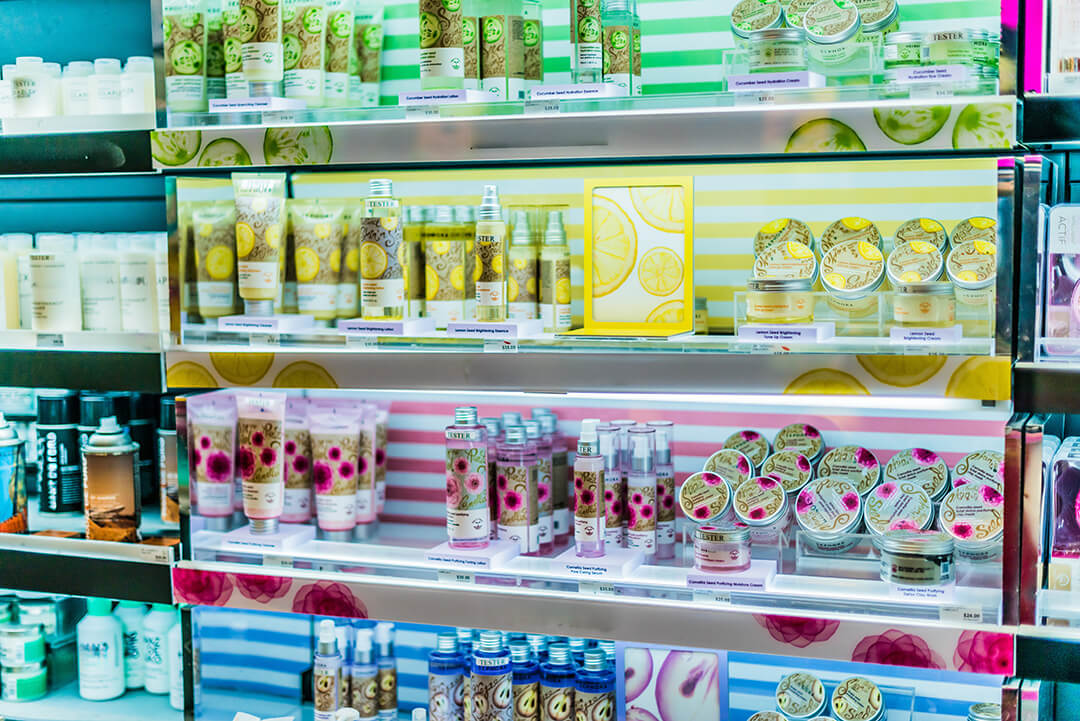
When shoppers are scanning a crowded shelf, packaging has a lot of work to do.
It needs to communicate what the product is, establish the brand, attract attention, differentiate from competitors, provide important information, and withstand everything from manufacturing to transportation to consumer use.
At the same time, brands are under increasing pressure to rethink the environmental impact of their packaging.
That can create a question for packaging and marketing teams:
Can packaging be both highly impactful and more sustainable?
The answer is yes, but it requires looking at sustainability as part of the packaging design process rather than as a constraint added at the end.
What Is Shelf Impact?
Shelf impact is the ability of packaging to attract attention and communicate a product’s value in a crowded retail environment.
Color, contrast, typography, imagery, package shape, finishes, materials, and even the amount of visible space can all contribute to how a package is perceived.
For brands competing within categories where products look similar, these visual elements can become especially important.
A package does not necessarily need to be louder to have strong shelf impact. Strong hierarchy, recognizable brand assets, intentional color use, tactile elements, and distinctive structures can all help a product stand apart.
Research has also shown that packaging materials and graphics can influence consumers’ perceptions of both sustainability and product qualities such as taste and quality. In other words, the package communicates more than the information printed on it.
What Makes Packaging Sustainable?
Sustainable packaging is not simply a matter of choosing a material that looks environmentally friendly.
The U.S. Environmental Protection Agency takes a life-cycle approach to sustainable materials management, considering how materials are sourced, manufactured, used, reused, recycled, or disposed of. Source reduction, including reducing unnecessary packaging and using materials more efficiently, is an important part of that approach.
For packaging teams, that means there are several areas to consider:
- Material reduction: Can the package use less material without compromising performance?
- Lightweighting: Can the construction be made lighter while maintaining required functionality?
- Material selection: Is there a material that better fits the package’s intended end-of-life pathway?
- Recyclability: Can the package and its components work within an established recycling system?
- Durability: Will the package protect the product and prevent damage or waste?
- Printing and decoration: Can the desired visual effects be achieved while maintaining the intended packaging construction?
- Consumer communication: Are sustainability claims clear and accurate?
This broader view is important because one packaging component rarely tells the whole sustainability story.
Sustainability Does Not Mean Sacrificing Design
One of the biggest misconceptions about sustainable packaging is that brands have to give up the visual characteristics that make their packaging recognizable.
They don’t.
In fact, sustainability can become another design consideration.
Instead of starting with:
“What can we remove from the design to make it more sustainable?”
Packaging teams can ask:
“How can we achieve the same brand impact with a smarter packaging construction?”
That could mean exploring a different label material, reducing material thickness, changing the package format, adjusting the amount of coverage, or selecting a decoration or printing approach that works with the desired construction.
For example, shrink sleeves can provide 360-degree graphics and significant shelf presence while also offering recyclable and recycling-compatible options depending on the container, sleeve construction, and recycling pathway. Inovar offers several shrink sleeve constructions designed to support different recyclability objectives.
The point is not that one format is always more sustainable.
The point is that design and sustainability decisions can be made together.
Design for the Entire Package, Not Just the Label
A common mistake is evaluating the sustainability of a label independently from the rest of the package.
But the package is a system.
A bottle, jar, pouch, label, sleeve, adhesive, ink, closure, and other components can all affect how the finished package performs throughout its life cycle.
This is particularly important when recyclability is a goal.
For example, Inovar’s work with shrink sleeves considers the relationship between the sleeve and the primary container. Depending on the construction, sleeves can be designed to separate from PET containers during recycling or to remain compatible with the recycling process.
That is why packaging teams should evaluate the complete package early in development.
Ask:
- What material is the primary container?
- What material is the label or sleeve?
- How is the label attached?
- What happens to each component during recycling?
- Does the package need to meet specific recycling guidance?
- Does the design require specialty inks, coatings, foils, or other embellishments?
- Can the package be made lighter or use fewer materials?
- Will the package still protect the product throughout its intended life?
Shelf Impact Can Come From More Than Material
Sustainable packaging does not have to rely on an “earthy” visual aesthetic.
Green colors, kraft textures, natural imagery, and minimalist graphics may communicate sustainability, but they are not requirements for creating more sustainable packaging.
In fact, research has found that consumers can make sustainability judgments based on graphical cues that do not necessarily correspond to the actual environmental impact of the package.
That creates an important distinction:
Looking sustainable is not the same as being sustainable.
A brand can maintain bold colors, distinctive typography, metallic effects, detailed illustrations, or other recognizable brand assets while making thoughtful material and construction choices.
This is especially important for established brands that have spent years building visual recognition.
The goal should not necessarily be to make a package look more sustainable.
The goal should be to make the packaging more thoughtfully designed for its intended use and end-of-life pathway, then communicate those benefits accurately.
Recyclability and Shelf Appeal Can Work Together
Recyclability is one of the sustainability attributes consumers pay attention to, but consumers do not always agree on which materials are actually the most sustainable. McKinsey’s 2025 consumer research found that recyclability ranked as the most important sustainability trait globally, while perceptions of different packaging materials varied by geography and recycling infrastructure.
That variability matters.
A material that performs well in one recycling system may not have the same outcome in another.
For brands selling nationally or internationally, packaging decisions therefore need to consider the markets where the package will actually be sold and discarded.
For brands, this reinforces an important principle:
Don’t design the sustainability claim first and figure out the packaging later.
Start with the actual package construction and applicable requirements, then determine what can accurately be communicated.
5 Ways to Balance Shelf Impact and Sustainability
1. Start With the Package’s Purpose
Before selecting materials or finishes, identify what the package needs to accomplish.
Does it need:
- High barrier protection?
- Moisture resistance?
- Light protection?
- Tamper evidence?
- Durability?
- Extended shelf life?
- Full-body graphics?
- Variable information?
- Easy application?
- Recyclability?
Sustainability should be considered alongside these requirements rather than separately.
2. Look for Opportunities to Reduce Material
Sometimes the most meaningful improvement is simply using less material.
Right-sizing, lightweighting, reducing unnecessary layers, and eliminating excess packaging are all examples of source reduction strategies identified by the EPA.
Material reduction can also create other benefits, including potential efficiency and cost improvements.
3. Keep the Brand Assets That Matter
Not every element of a package contributes equally to brand recognition.
Identify the assets that consumers immediately associate with the product:
- Brand colors
- Logo
- Typography
- Signature graphics
- Product photography
- Shape
- Icons
- Finishing effects
Then determine where changes can be made without losing the visual identity.
This allows sustainability improvements to happen without completely reinventing the package.
4. Test Before Committing to a Full Run
A packaging concept can look completely different on a computer screen than it does as a physical package.
Material opacity, gloss, texture, color reproduction, metallic effects, shrink distortion, and label placement can all change the finished appearance.
Physical prototyping gives packaging teams an opportunity to evaluate the actual package before committing to a larger production run.
Inovar’s Innovation Lab provides a space for brands to test materials, experiment with label designs and embellishments, and create physical prototypes before full-scale production.
5. Evaluate the Whole Package
A sustainability improvement is only useful if the package continues to perform its primary job.
A lighter package that causes product damage may create a different type of waste.
A recyclable label on a package with incompatible components may not deliver the intended end-of-life result.
And a beautiful sustainability claim that cannot be substantiated can create compliance and consumer-trust concerns.
The best packaging decisions consider performance, appearance, functionality, material use, recyclability, and end-of-life together.
The Future of Sustainable Packaging Is Not “Boring Packaging”
There is a tendency to think of sustainable packaging as minimalist packaging: fewer colors, fewer graphics, fewer finishes, and less visual personality.
That is one approach, but it is not the only one.
Sustainable packaging can still be bold.
It can still be colorful.
It can still feel premium.
It can still use distinctive shapes, high-impact graphics, specialty finishes, and innovative labeling formats.
The opportunity is to rethink how those design elements are delivered.
Inovar’s sustainable label solutions include options ranging from pressure-sensitive labels to digitally printed shrink sleeves, giving brands different ways to approach sustainability without treating visual impact as an afterthought.
A Better Question for Packaging Teams
Instead of asking:
“Do we prioritize shelf impact or sustainability?”
A better question may be:
“What packaging solution gives us the shelf impact we need while meeting the performance and sustainability goals of the package?”
That changes the conversation from a trade-off to a design challenge.
And design challenges are exactly where collaboration between brand, marketing, packaging engineering, sustainability, procurement, and packaging suppliers can make a difference.
Frequently Asked Questions
Can sustainable packaging still have strong shelf impact?
Yes. Sustainability and shelf impact are not mutually exclusive. Brands can maintain strong visual identities through color, graphics, typography, package shape, printing, and finishing while also evaluating material efficiency and recyclability.
Does sustainable packaging have to look minimalist?
No. A minimalist visual style can communicate sustainability, but appearance alone does not determine whether packaging is sustainable. Material selection, package construction, resource use, performance, and end-of-life considerations all matter.
What makes packaging more sustainable?
There is no single factor. Potential strategies include source reduction, lightweighting, material efficiency, recyclability, reuse, recycled content, and designing packaging to perform effectively throughout its intended life cycle. The right approach depends on the specific package and its recycling or disposal infrastructure.
Can recyclable packaging still use specialty finishes?
In many cases, yes, but the answer depends on the specific material structure, printing process, finish, and recycling pathway. Packaging teams should evaluate the complete construction rather than assuming that a single component determines recyclability.
How can brands test sustainable packaging designs before production?
Physical prototypes can help teams compare materials, graphics, finishes, fit, and overall shelf appearance before committing to a full production run. Inovar’s Innovation Lab supports material testing, design iteration, and packaging prototyping.
Is recyclable packaging automatically sustainable?
No. Recyclability is one consideration within a broader sustainability picture. A complete evaluation can also include material use, manufacturing, transportation, product protection, consumer use, and end-of-life management.
The Bottom Line
Shelf impact and sustainability do not have to compete.
The strongest packaging strategies consider both from the beginning.
By evaluating the entire package, reducing unnecessary material, selecting appropriate constructions, protecting the product, and designing graphics around the realities of the chosen materials, brands can create packaging that is visually distinctive and thoughtfully designed for its environmental goals.
Sustainability does not have to mean sacrificing the brand.
It can be another part of the design brief.
THE LATEST FROM INOVAR


WE'RE HERE TO SERVE YOU
Creating and producing labels can be overwhelming, but our experts are here to guide you every step of the way. Whether you have a project ready to go, have questions about label applications or materials, or want to learn more about our services, our team is ready to assist you.