


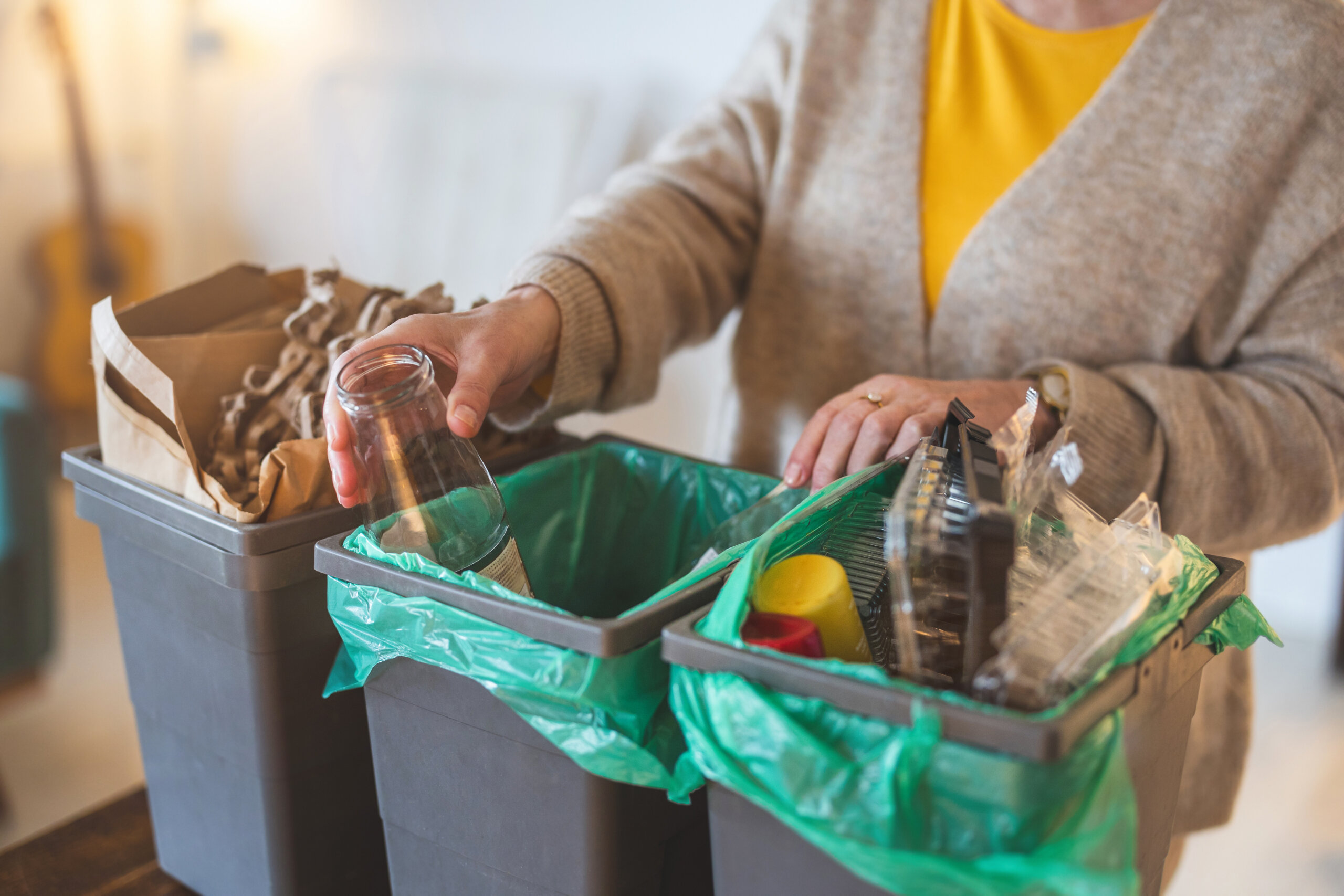
Designing Labels With End-of-Life Packaging Considerations in Mind
Key Takeaways
- A label can influence what happens to a package after a consumer finishes using the product.
- Label material, adhesive, ink, coatings, embellishments, and overall coverage can affect how packaging performs in recycling systems.
- The best label construction depends on the primary container material and the recycling process it is designed to enter.
- Designing for recyclability does not mean sacrificing branding, product information, or label performance.
- End-of-life considerations should be part of packaging development from the beginning, not an afterthought.
Introduction
When designing product packaging, most of the attention goes toward what consumers see first: the graphics, colors, product information, and overall shelf appeal. But what happens after the product is used?
That question is becoming an increasingly important part of packaging design.
A package may be marketed as recyclable, but its actual recyclability depends on more than the primary container material. Labels, adhesives, inks, coatings, and other components can all influence how the package moves through a recycling system and whether its materials can be recovered successfully.
For brands, this creates an opportunity to look beyond the initial appearance and performance of a label. The goal is to select a construction that meets the needs of the product while considering what happens when the packaging reaches the end of its useful life.
Designing labels with end-of-life considerations in mind does not mean every package needs to look different or use fewer design elements. It means understanding how individual choices affect the complete packaging system and making informed decisions early in the process.
Here are several considerations to keep in mind when developing labels for more sustainable packaging.
1. Start With the Primary Packaging Material
One of the first questions to ask when designing a label is: What material is the container made from?
The answer matters because different materials move through different recycling processes. A label that works well on one type of container may create challenges when paired with another.
For example, PET and HDPE plastics have different recycling requirements. Glass and aluminum follow different processes altogether. As a result, label materials and constructions need to be evaluated in relation to the primary package.
Consider a few common examples:
PET containers: Labels, adhesives, and inks need to be compatible with PET recycling. Depending on the construction, labels may need to separate from the container during washing, float away from the PET material, or meet other design criteria.
HDPE containers: Label materials and adhesives should be evaluated based on how they behave during HDPE recycling. Certain materials can interfere with sorting or affect the quality of the recovered plastic.
Glass containers: Labels are generally separated from glass during processing, but the complete packaging design still matters. Label materials, inks, and adhesives should be considered alongside the container and any other components.
Aluminum containers: Labels are typically removed during the recycling process, but their construction and compatibility with the package should still be evaluated.
The important takeaway is that there is no single label material that is automatically the best choice for every recyclable package.
The Association of Plastic Recyclers (APR) provides design guidance for different plastic packaging types through its Design Guide for Plastics Recyclability. These guidelines help brands and packaging suppliers evaluate how individual components affect the recycling process.
2. Choose Label Materials That Support the Intended Recycling Stream
The label facestock is one of the most visible parts of the packaging, but it is also an important design consideration for end-of-life performance.
Different label materials behave differently during recycling. Some are designed to separate from the primary container, while others may be compatible with the container and remain with it throughout processing.
The right approach depends on the material being recycled and the requirements of that specific recycling stream.
Pressure-Sensitive Labels
Pressure-sensitive labels are widely used across food and beverage, personal care, healthcare, and household products.
For recyclable packaging, the label material and adhesive should be evaluated together. Depending on the container, a compatible label may separate cleanly during washing, allowing the primary material to be recovered.
For example, certain pressure-sensitive constructions are designed to release from PET containers during the recycling process. Other constructions may be designed to work with HDPE or other plastic packaging.
Roll-Fed Labels
Roll-fed labels are commonly used on high-volume beverage and consumer product containers.
These labels can be designed with compatible film materials and ink systems that support the intended recycling process. In some PET applications, the label is designed to separate during washing and float away from the denser container material.
This allows the primary container to continue through the recycling process while the label is removed.
Shrink Sleeves
Shrink sleeves provide extensive graphic coverage and can accommodate complex container shapes. However, their coverage and material selection require careful consideration.
A full-body sleeve made from an incompatible material can interfere with sorting or recycling if it is not properly identified and separated.
Depending on the container and recycling stream, options may include sleeves designed to separate during processing, compatible sleeve materials, or perforations that help consumers remove the sleeve before recycling.
The key is to evaluate the complete sleeve construction, including the film, inks, coverage, and separation behavior.
For a closer look at these options, explore Inovar’s sustainable and recyclable label solutions.
3. Consider Adhesives and How Labels Separate
A label’s adhesive may not be visible once the label is applied, but it can have a significant impact on what happens during recycling.
Adhesives are designed to keep labels securely attached throughout manufacturing, distribution, storage, and product use. However, that same bond may need to release under specific conditions during recycling.
This creates a balancing act: the adhesive needs to perform throughout the product’s useful life while behaving appropriately at the end of it.
Depending on the recycling process, considerations may include:
- Whether the adhesive releases during hot-water or caustic washing
- Whether adhesive residue remains on the container
- Whether adhesive disperses into the wash water
- Whether the adhesive interferes with the quality of recovered material
- How much adhesive is used across the label surface
For some applications, wash-off or clean-release adhesive systems can help labels separate from containers during recycling. In other applications, a construction designed to remain compatible with the primary material may be more appropriate.
There is no universal adhesive solution. Compatibility needs to be evaluated against the intended recycling process and the specific label and container combination.
4. Pay Attention to Inks, Coatings, and Embellishments
Graphics are an important part of packaging design, but the materials used to create them can also affect end-of-life performance.
Inks, coatings, laminates, metallic finishes, and specialty embellishments should all be considered when evaluating a label for recyclability.
For example, certain inks can bleed or discolor recycled material during washing. Other ink systems are designed to remain attached to the label or behave in a way that is more compatible with the recycling process.
Some design elements worth reviewing include:
Ink systems: Evaluate whether inks remain on the label, wash away cleanly, or create potential contamination during processing.
Coatings and varnishes: Protective coatings may affect how a label separates or how its materials behave during recycling. Their compatibility should be considered before they are added to the design.
Metallic effects: Metallic inks, foils, and other decorative elements may create challenges in certain recycling streams, depending on their composition and coverage.
Laminates: Laminated constructions combine multiple materials. These layers may complicate recycling if they cannot be separated or processed together.
This does not mean brands need to eliminate every specialty finish. Instead, designers should understand which elements are compatible with the intended packaging system and where alternatives may be available.
A strong label design balances visual impact with material compatibility.
5. Evaluate Label Size and Coverage
The amount of a container covered by a label can affect how packaging is identified and processed by recycling equipment.
This is especially important for plastic containers that rely on optical sorting systems. These systems use sensors to identify and separate different types of materials, and certain label designs can interfere with that process.
Large labels or full-body sleeves may obscure the container’s underlying material or affect how the package is recognized.
In some applications, reducing label coverage or adjusting its placement can improve compatibility with the recycling process.
However, the appropriate coverage limit depends on the container material, label construction, and applicable design guidelines. A percentage that works for one package should not automatically be applied to another.
When reviewing label coverage, consider:
- How much of the container surface the label covers
- Whether the label obscures material identification
- Whether the label needs to remain on the package during sorting
- Whether the label is designed to separate during washing
- Whether perforations or other design features could improve separation
The goal is not necessarily to make every label smaller. It is to understand how the label interacts with the recycling process and adjust the design where it makes a meaningful difference.
6. Think About the Consumer’s Role at End of Life
Some packaging designs rely on the consumer to take an additional step before disposal.
For example, a shrink sleeve may include a perforation that allows it to be removed from the container. A label may include instructions to separate certain components before placing the package in a recycling bin.
When a design depends on consumer action, the instructions need to be clear and easy to follow.
Consider:
- Is the label or sleeve easy to remove?
- Is a perforation or pull tab needed?
- Can consumers tell which components should be separated?
- Are disposal instructions accurate for the intended market?
- Will the instructions remain visible and readable?
Consumer instructions should not be used as a substitute for a compatible package design. They should support a system that has already been evaluated for its intended end-of-life pathway.
It is also important to avoid broad recycling claims that may not apply everywhere. Recycling access and accepted materials vary by location, so disposal instructions should be based on the actual packaging construction and relevant local guidance.
7. Look Beyond Recycling: Other End-of-Life Considerations
Recycling is an important part of packaging sustainability, but it is not the only possible end-of-life pathway.
Depending on the product and packaging format, other considerations may include reuse, composting, or waste reduction.
Reusable Packaging
Some products are packaged in containers designed for repeated use or refill programs.
In these applications, labels may need to withstand repeated handling, cleaning, or exposure to moisture and chemicals. Adhesive performance and label durability become especially important because the packaging is expected to remain in use longer.
Compostable Packaging
Compostable packaging requires a different approach from recyclable packaging.
A label that is described as compostable needs to be compatible with the intended composting environment and the applicable certification requirements. The label, adhesive, ink, and other components should be evaluated as part of the complete packaging system.
A compostable label does not automatically make the entire package compostable.
Reducing Material Use
Sometimes the most practical sustainability improvement is reducing the amount of material used in the first place.
Options may include thinner label materials, reduced liner thickness, more efficient label layouts, or constructions that minimize production waste.
For example, Inovar’s Sustainable and Recyclable Packaging Guide explores material options and opportunities to reduce packaging waste, including thinner liners and recycled-content materials.
8. Bring End-of-Life Considerations Into the Design Process Early
One of the biggest mistakes brands can make is waiting until the label artwork is complete to evaluate recyclability.
By that point, the container, label material, adhesive, inks, and decorative elements may already be selected. Making changes can require new artwork, material testing, production adjustments, or additional approvals.
Instead, end-of-life considerations should be included during the initial packaging development process.
Before finalizing a label, ask:
- What material is the primary container made from?
- Which recycling or disposal stream is the package designed to enter?
- Is the label material compatible with that process?
- How does the adhesive behave during recycling?
- Could inks, coatings, or embellishments affect recovered materials?
- Does label coverage create sorting or separation concerns?
- Does the package require consumer separation instructions?
- Have the complete container and label construction been evaluated together?
It is also important to involve suppliers early. Label manufacturers can help evaluate available materials, adhesive systems, printing options, and construction alternatives based on the package’s requirements.
For brands looking to take a more comprehensive approach, Inovar’s Sustainable and Recyclable Packaging Guide provides additional information about material selection and packaging design considerations.
The Bottom Line
A label’s job does not end when a product leaves the store. Its material, adhesive, inks, coatings, and overall construction can all influence what happens to the package after use.
Designing with end-of-life considerations in mind means looking at the complete packaging system rather than evaluating the label on its own. The right construction depends on the primary container, intended recycling or disposal pathway, product requirements, and performance expectations.
By considering these factors early, brands can make more informed packaging decisions, identify potential compatibility issues, and work toward designs that balance shelf appeal, product performance, and end-of-life goals.
At Inovar Packaging Group, we work with brands to evaluate label materials and constructions that support their sustainability and packaging objectives. Through our Inovar360® portfolio of APR-aligned label solutions, we help customers explore options for pressure-sensitive labels, roll-fed labels, shrink sleeves, and other packaging formats.
The best packaging decisions consider the entire lifecycle, from the moment a product reaches the shelf to what happens after it is used.
Frequently Asked Questions
What does end-of-life packaging mean?
End-of-life packaging refers to what happens to a package after the consumer has finished using the product. Depending on the materials and available infrastructure, the package may be recycled, reused, composted, or disposed of as waste.
How do labels affect packaging recyclability?
Labels can affect how packaging is sorted, separated, washed, and processed. Factors such as label material, adhesive, ink, coatings, and surface coverage can influence whether the primary container can be recovered successfully.
What makes a label recyclable?
A label is considered compatible with a recycling system when its materials and construction do not interfere with the intended recycling process. This may involve separating cleanly from the container, remaining compatible with the container material, or meeting other requirements established for that recycling stream.
Are pressure-sensitive labels recyclable?
Pressure-sensitive labels can be designed to support recyclable packaging, but the appropriate construction depends on the primary container. The facestock, adhesive, inks, and label coverage all need to be evaluated together.
Do shrink sleeves affect recycling?
They can. Shrink sleeves that use incompatible materials or cover too much of a container may interfere with sorting or recycling. Depending on the application, compatible sleeve materials, washable inks, or perforations that help consumers remove the sleeve may be appropriate.
Why are adhesives important in recyclable label design?
Adhesives hold labels in place during product use, but they may need to release or behave differently during recycling. An incompatible adhesive can leave residue on containers or interfere with the recovery of materials.
Can sustainable labels still include decorative finishes?
Yes, but finishes such as metallic inks, foil, laminates, and specialty coatings should be evaluated for compatibility with the intended recycling process. Some effects may be suitable for certain applications but problematic in others.
Should consumers remove labels before recycling?
Not always. Whether a label should be removed depends on the container, label construction, and local recycling guidance. Some labels are designed to separate during recycling, while others may need to be removed by the consumer. Brands should provide disposal instructions based on the actual package design and local requirements.
THE LATEST FROM INOVAR


WE'RE HERE TO SERVE YOU
Creating and producing labels can be overwhelming, but our experts are here to guide you every step of the way. Whether you have a project ready to go, have questions about label applications or materials, or want to learn more about our services, our team is ready to assist you.